
- Collection type
- Object
- Description
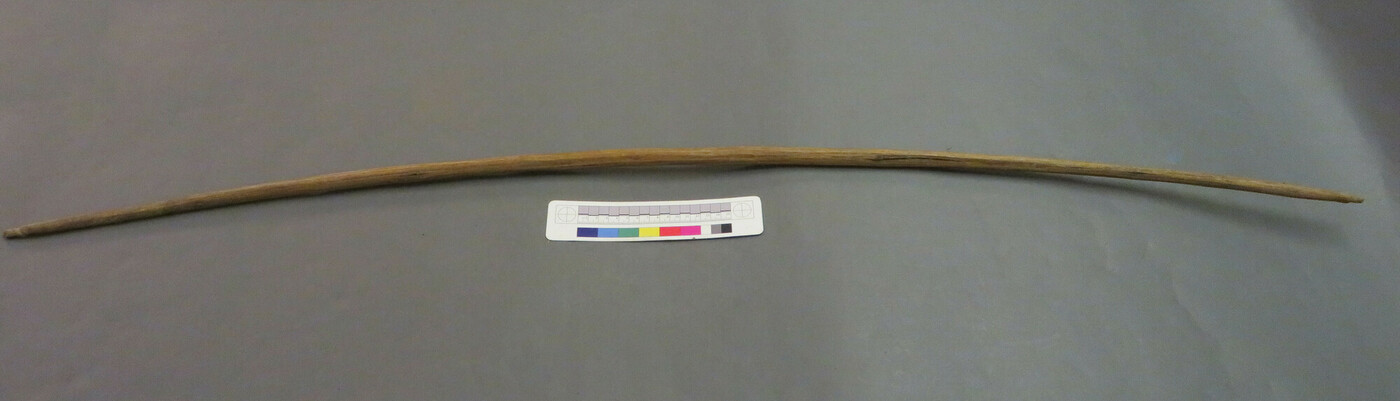
- Curved bow shaft; the string has not been preserved [RTS 27/9/2005].
- Long description
- Bow shaft carved from a wooden branch, stripped of its bark, stained a reddish brown colour and polished (Pantone 732C). Some of this surface colour has subsequently worn away. It has an oval section, and tapers to a point at both ends, one of which is more markedly tapered than the other. It has been bent into a slight, shallow curve, presumably by once being strung as a bow, although no bow string is now present, and there are no obvious markings from its bindings around the ends of the shaft. The shaft is complete, but has badly split along its length on the inside and outside edges. It has a weight of 429 grams. [RTS 27/9/2005].
- Geographical reference
- Cultural groups
- Bongo
- Person
- Maker Unknown Maker
- Field collector John Petherick
- PRM source Augustus Henry Lane Fox Pitt Rivers founding collection
- Date / Period
- Date made: Before 1874
- Date collected
- Prior to 1874
- Acquisition information
- Donated: 1884
- Materials and processes
- Material Wood Plant, Process Carved, Process Stained, Process Polished
- Dimensions
- Length: max 1498 mm, Width: max 24 mm, Depth: max 20 mm, Weight 429 g
- Object numbers
- Accession number: 1884.15.12
- Research and responses
Although no field collector is indicated, the period in which this was acquired, and the group to which it belongs, makes it possible that it had come originally from John Petherick's collection of Bongo material, probably acquired by him in the Southern Sudan between 1856 and 1858, when he led three trading expeditions through Bongo territory, and shipped back to England in 1859.
Petherick described the use of the bow and arrow by the Bongo (whom he called the Dor) as follows: "... the favourite weapon of the Dor is the bow and arrow, with which they use three or four fearfully barbed spears, and clubs ... The workmanship of the arrows will bear inspection, when it will be found that the heads of scarcely two are alike, and the generality of them so numerously barbed that extraction cannot take place without making a considerable incision to free it from the muscle or flesh in which it may be imbedded. Occasionally some of these arrows are poisoned; this, however, with the Dor is but rarely the case, as they are also used in the chase. ... The tactics of the Dor when giving battle are to run up to within fifty or sixty yards of the enemy and discharge a quantity of arrows at him and, if not successful, to undertake as rapid a retreat: when followed, and approached, they receive a similar flight of arrows, which, after endeavouring to evade by a series of gymnastics, as soon as they are spent, they repeat the charge, and so on, until on one side or the other so many arrows have taken effect as to impede the rapid movements of a certain number of the party, which is taken advantage of by a hot pursuit: then, when encumbered by the arrows, the men that have been so hit, unable to extract them and accompany their unscathed companions, drop behind, and thus become the objects at whom to throw barbed lances... (J. Petherick, 1861, "On the arms of the Arab and Negro tribes of Central Africa, bordering on the White Nile", Journal of the Royal United Services Institution IV no. 13, p. 174 ff). See also J. Petherick, 1861, Egypt, The Soudan and Central Africa, p. 400.
Petherick gives the 'Dor' name for a bow as hunyu (Petherick 1861, Egypt, The Sudan and Central Africa, p. 482). It is not known if this term refers to a specific type of bow or not [RTS 20/1/2004].
Search terms: Archery Weapon, Bow
Further items to explore
 1934.81.25.1Bow, part of the crossbow 1934.81.25. For the associated stock and trigger see 1934.81.25 .2 [ASh [OPS move] 20/9/2017]1934.81.25.1
 1966.1.280Wooden 'self' bow with broad tips. [ASh [OPS move] 26/7/2017]1966.1.280
 1900.55.532Bow, made from wood. Plant fibre string attached. [ASh [OPS move] 14/8/2017]1900.55.532
 1972.14.24Bow, made from wood. [ASh [OPS move] 7/8/2017]1972.14.24
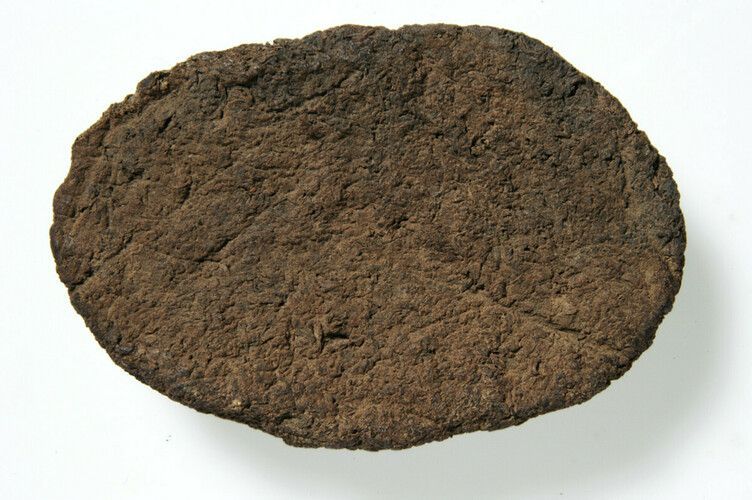 1937.34.62Oval cake of compressed tobacco, with convex upper surface and concave underside, used for smoking and as snuff [RTS 19/10/2004].1937.34.62
 1966.1.517.11Penannular iron arm or leg ornament with trapezoidal section and overlapping ends [RTS 21/7/2005].1966.1.517.11
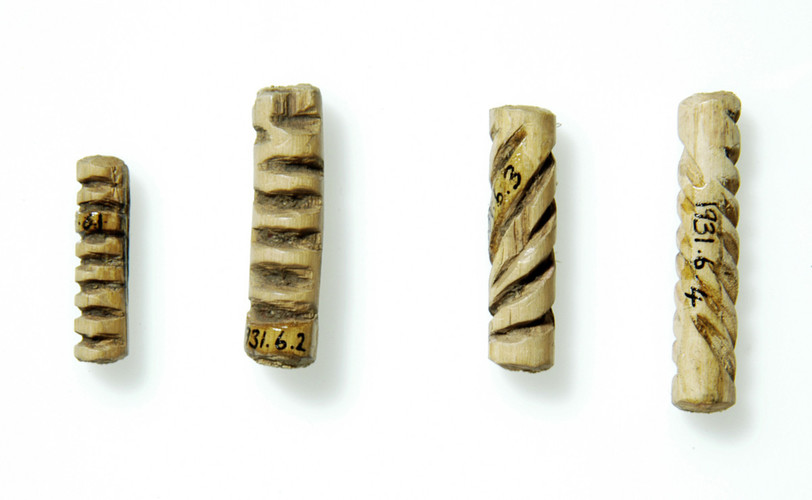 1931.6.1.1Wooden cylindrical roulette with incised lines cut into body, used for decorating pottery [.1] [RTS 18/10/2004]. With a modern impression. [.2]. [El.B 'DCF 2004-2006 What's Upstairs?' 22/11/2004]1931.6.1.1
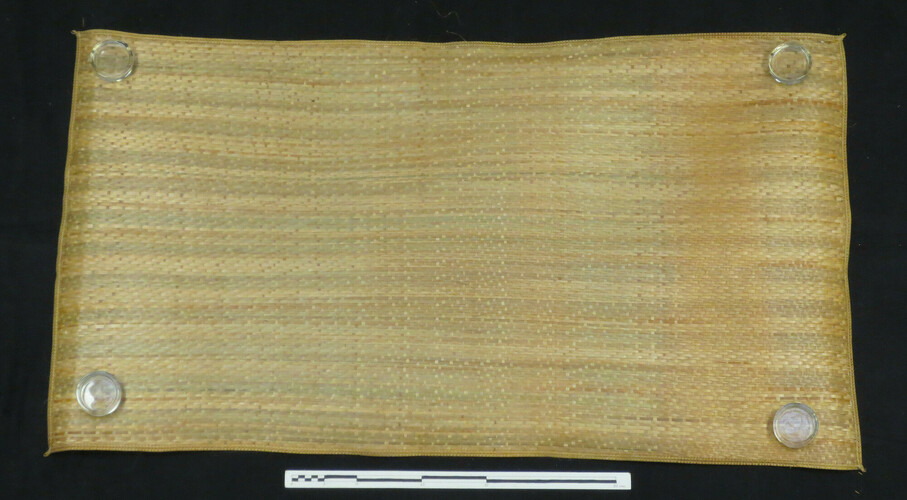 1948.2.159.10Rectangular mat made of chequerwoven strips of yellow palm fibre with fringed inner edges [RTS 8/8/2005].1948.2.159.10