
- Collection type
- Object
- Description
- Stone grinder in the form of an animal's head and neck.
- Long description
- Stone animal's head and neck from a grinder. The head looks feline with triangular teeth, a snout, eyes and small ears. The stone is dark brown coloured and pitted. [MJD (Verve) 15/2/2016]
- Geographical reference
- Person
- Maker Unknown Maker
- Field collector Berthold Carl Seemann
- Field collector Dr Seaman
- PRM source Augustus Henry Lane Fox Pitt Rivers founding collection
- Date / Period
- Date made: Circa 300-700
- Date collected
- By 1874
- Acquisition information
- Donated: 1884
- Dimensions
- Height: max 230 mm, Width: max 145 mm, Length: max 160 mm
- Object numbers
- Accession number: 1884.10.25
- Research and responses
Originally documented simply as coming from Central America. This is probably part of a zoomorphic-effigy tripod metate from Costa Rica (see DOC). It seems to represent a feline. These metates were found in high status burials in the Guanacaste-Nicoya zone, and were probably religious symbols rather than for domestic use. [LM]
- Associated publications
- Referred to on page 385 of 'Central America', by Elizabeth Graham, Dan Hicks and Alice Stevenson, in World Archaeology at the Pitt Rivers Museum: A Characterization, edited by Dan Hicks and Alice Stevenson (Oxford: Archaeopress, 2013), pp. 383-400. Graham, Hicks and Stevenson write: 'The remaining 4 artefacts are recorded as ‘found in a tumulus’ by Dr Berthold Carl Seemann (1825–1871): a sickle-shaped stone tool (1884.126.223), and 4 stone metates (grinding slabs) with carved decorations (1884.10.25, 1884.10.27–28, 1884.68.76). Seemann was a German botanist who trained at the Royal Botanical Gardens, Kew, and travelled widely around the world: visiting South America in the 1860s, before managing a sugar estate in Panama, and the Javali gold mine in Chontales, Nicaragua where he was the manager (Belt 1874: 94, footnote 1) until his death in 1871. In his account of travel in Panama, Nicaragua and Mosquito, written with Bedford Pim (Pim and Seemann 1869), Seemann described the excavation of some of ‘a great number of ancient tombs...in the grassy districts of Chontales’ in Nicaragua: ... The similarity between this ‘hatchet like a reaping hook’ and the stone tool described above (1884.126.223) indicates that this object – and perhaps also the metates – may in fact come from burial mound excavations at Chontales, Nicaragua, rather than from Costa Rica.' [MJD (Verve) 7/1/2016]
Search terms: Food and Drink, Tool, Figure, Religion, Death, Grinder, Animal Figure, Grave Good, Food Accessory
Further items to explore
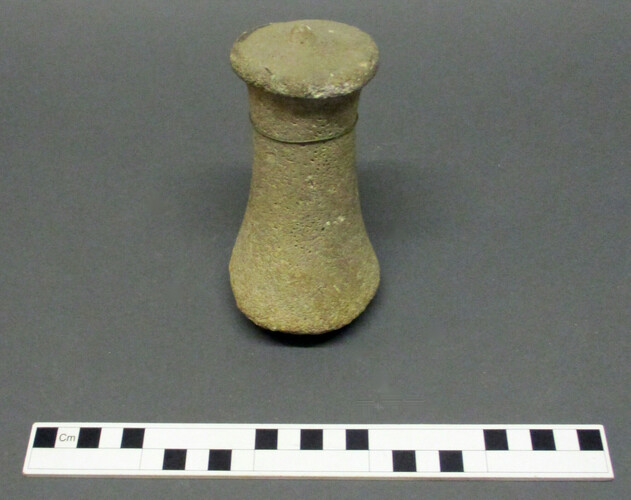 1941.2.67Stone pestle. The stone is grey in colour. [AB [OPS Move] 31/10/2016]1941.2.67
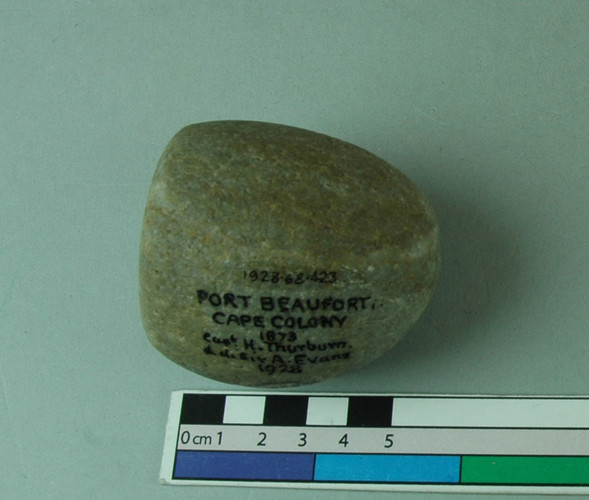 1928.68.423Grinder of a grey rounded stone with one flat side.[LKG 27/04/2010]1928.68.423
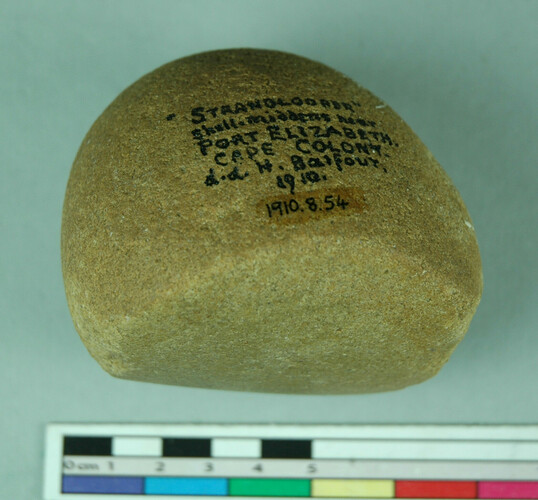 1910.8.54Rubbing-stone, dark orange pebble with smooth curved base. [MJD 25/01/2010]1910.8.54
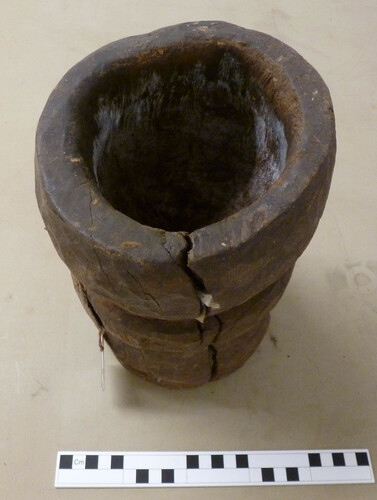 1973.14.66.1Wooden mortar carved from a single piece of wood. There is a central carved band around the middle of the mortar. For the pestle see [1973.14.66 .2] [RH [OPS move] 1/2/2018]1973.14.66.1
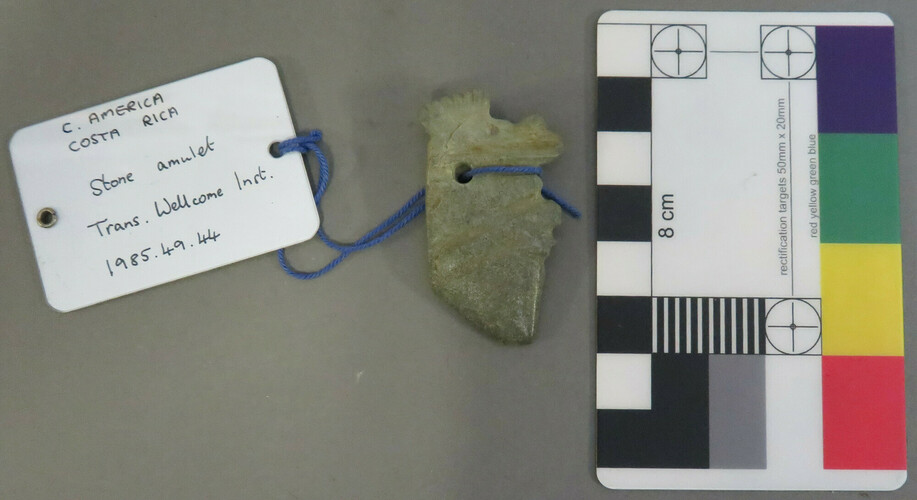 1985.49.44Amulet, polished grey stone knife surmounted with a carved animal figure in a headdress, in profile. One perforation for suspension. [EH [OPS move] 1/11/2017]1985.49.44
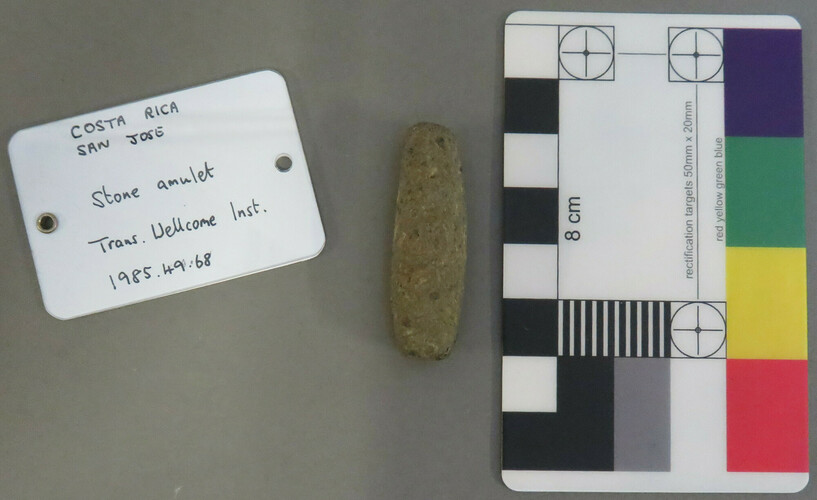 1985.49.68Stone amulet or pendant. Circular in section, wider in the middle than at the ends. [EH [OPS move] 1/11/2017]1985.49.68
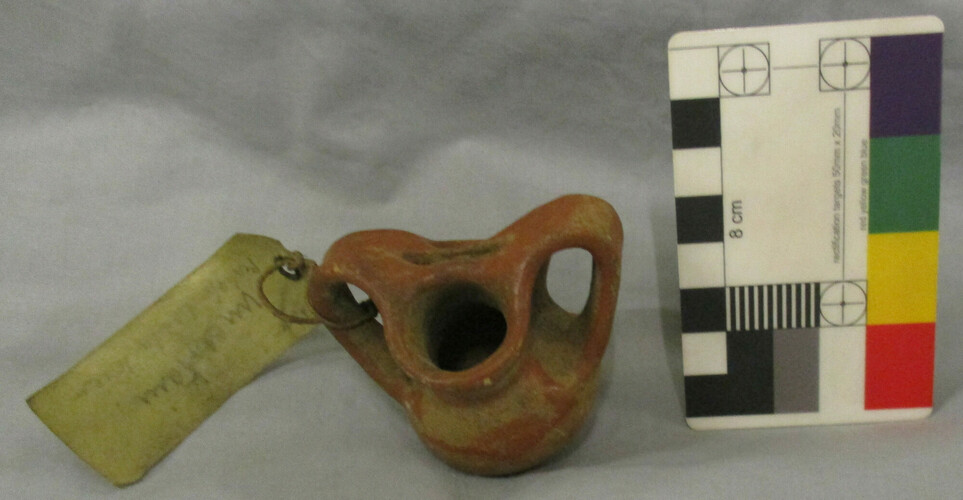 1884.41.10Red ware double pot with two handles on the sides and joined necks. White painted decoration on the exterior. Possibly burnished on the exterior. [ASh [OPS move] 23/03/2016]1884.41.10
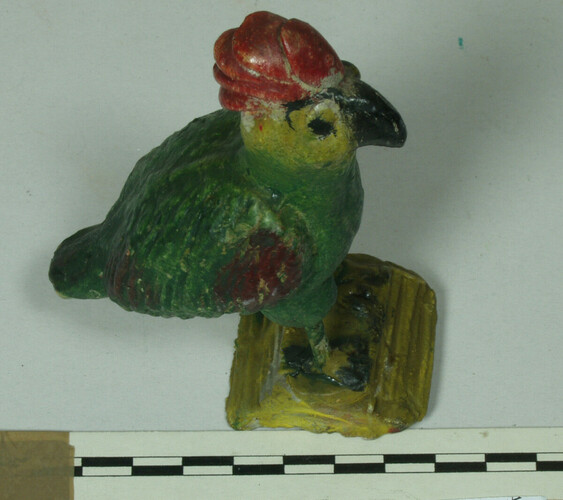 1951.11.100Pottery figure of bird, ?species of parrot, with upstanding comb. Legs of wood, fixed into a pottery stand on which the claws are modelled.1951.11.100