
- Collection type
- Object
- Description
- Cast iron bowl, oval-shaped with animal heads on both ends.
- Long description
- Cast iron bowl, oval-shaped with animal heads on both ends. One end of the bowl is slightly higher than the other. On this high end, the paws of a small figure are wrapped over the rim and its head projects upward. On the lower portion of this end is a second figure depicted with elongated eyes and nose and mouth cast in high relief. The nose contains the face of a third figure, whose legs can be found on the underside of the second figure's jaw. On the lower end of the bowl, a mammal (perhaps a bear with ears, eyes, snout and front legs and paws is cast just below the rim. Under the mammal is a hawk face with large eyes, short crooked beak and mouth. The underside of the bowl has two round indentations. [CAK 05/08/2009]
- Geographical reference
- British Columbia Haida Gwaii (Queen Charlotte Islands) Vancouver Island
- Cultural groups
- Haida
- Person
- Maker Unknown Maker
- Field collector Unknown Collector
- PRM source Augustus Henry Lane Fox Pitt Rivers founding collection
- Date / Period
- Date made: Before 1881, uncertain
- Date collected
- ?Prior to 1881
- Acquisition information
- Donated: 1884
- Materials and processes
- Material Iron Metal, Process Cast
- Dimensions
- Height: max 105 mm, Length: max 197 mm, Width: max 155 mm
- Object numbers
- Accession number: 1884.6.1 PR no.: 344 / 12191
- Research and responses
The following information comes from Haida delegates who worked with the museum’s collection in September 2009 as part of the project “Haida Material Culture in British Museums: Generating New Forms of Knowledge” :
This vessel was viewed alongside tools and domestic items on Monday, Sept 14, 2009. There was consensus among the delegation that the original wood dish from which this iron dish was cast was Haida. It provoked a lot of discussion, particularly about its manufacture. The material was believed to be cast iron. Gwaai Edenshaw and Jaalen Edenshaw believe the bowl was carved then cast. The bumps on the bottom of the bowl were identified as air vents from the casting process. Gwaai recommended looking for signs of scissile, a metalworking technique. They believe they eyes are unfinished and thought they would have been carved after casting. Other possible techniques of manufacture are sand casting, clay casting (both of which can leave undercuts that can be re-worked later), or using a ceramic mould with a release mechanism. A lost wax method was deemed possible if it was not reworked after casting. Sand casting from an old bowl would allow for the fineness of this piece, but does not allow for the undercuts. It was noted that the Haida did not have a centrifical system for casting, and subsequently the metal would have cooled too quickly. Gwaai Edenshaw added that air bubbles are likely to settle if the bowl were cast through gravity and that there is no evidence of such air bubbles on this piece. People speculated as to whether this piece was the result of a collaboration between a Haida craftsman and the blacksmith on a ship, or whether a blacksmith copied a Haida piece. People thought that blacksmiths on ships would have had the materials, equipment and environment required for casting.
Christian white identified the figure as a bear cub, which is a motif they have seen before. He noted similarities between it and the carved spoons and argillite. The shape of this bowl is akin to the shape of the horn bowls and judging by the use of moulds, Christian believes this is a post-contact piece.
In terms of the uses of bowls, Haida delegates noted that there are many including carrying medicines or berries, mashing berries, carrying tabbaco, or mixing pitch with other substances. [CAK 04/03/2010]
Search terms: Vessel, Food and Drink, Trade, Ritual and Ceremonial, Status, Bowl, Food Accessory, Status Object, Ceremonial Object
Further items to explore
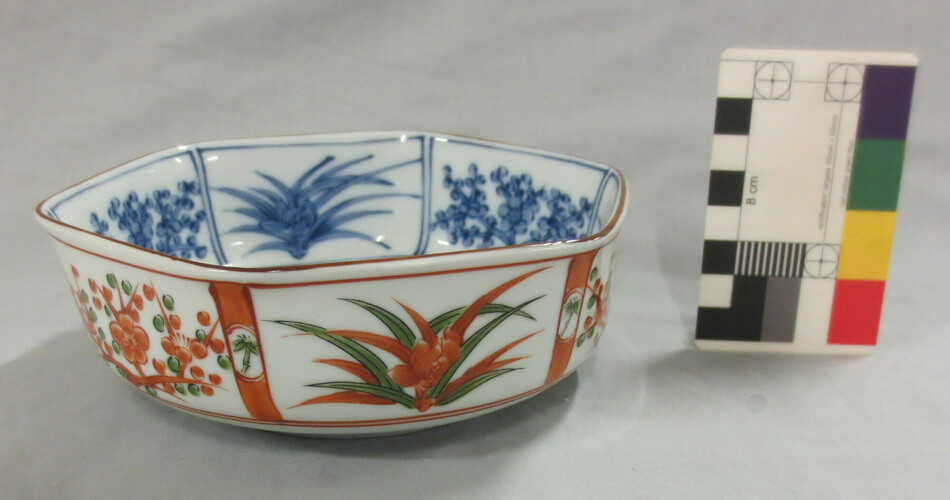 1996.17.249.1[1 of] Set of five bowls, porcelain painted in enamel colours; underglaze blue inside, red and green on the outside. [ASh [OPS move] 01/03/2016]1996.17.249.1
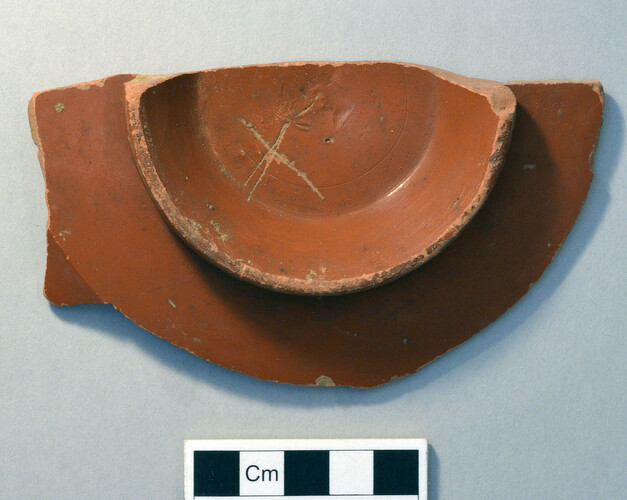 1884.41.66Base sherd of a Samian ware bowl with pedestal foot. Potter mark stamped on the base - INGENVI. Wear evident on the pedestal foot. [CG [Excav. PR] 03/06/2013]1884.41.66
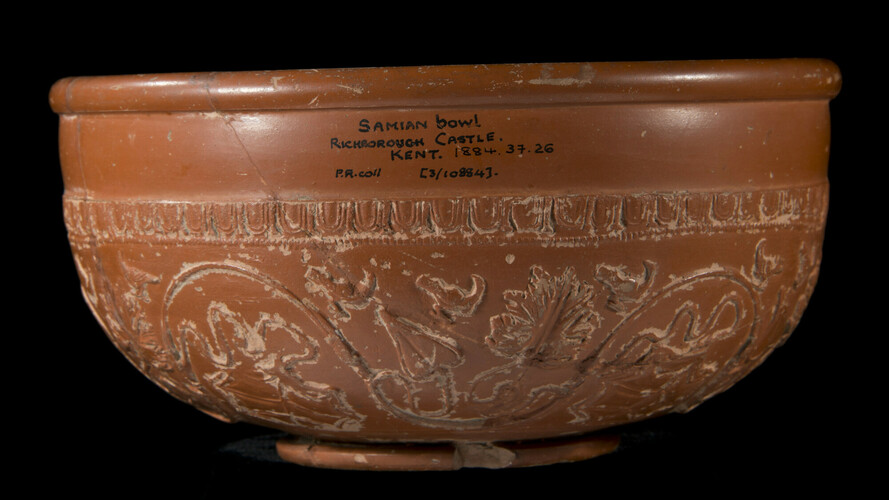 1884.37.26Samian ware bowl.1884.37.26
 2024.20.6Porcelain sherd, part of the base of a bowl or plate.2024.20.6
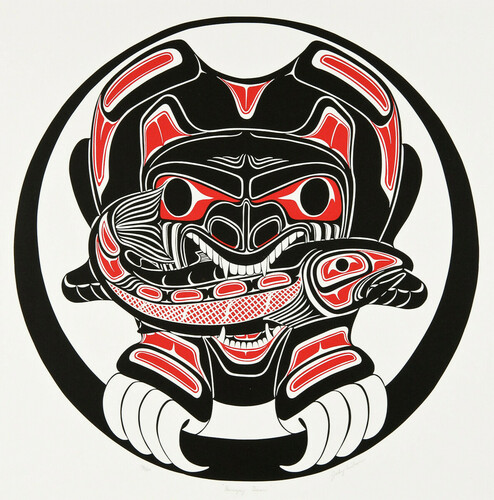 1994.59.2Hand-produced, bi-coloured screen print on linen rag paper of a bear with a fish in its mouth. [SM 18/03/2008]1994.59.2
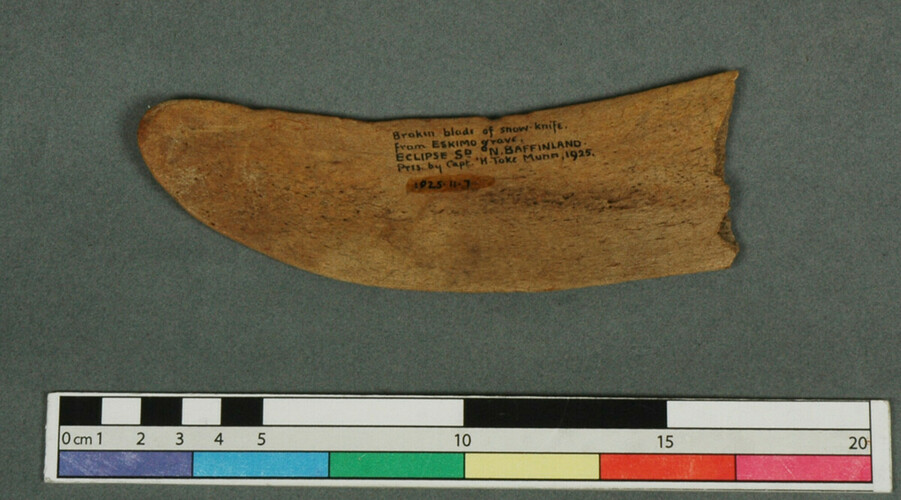 1925.11.7Broken bone snow-knife blade; from a grave. the blade edge is curved and the tip rounded. [CW [OPS Move] 20/4/2017]1925.11.7
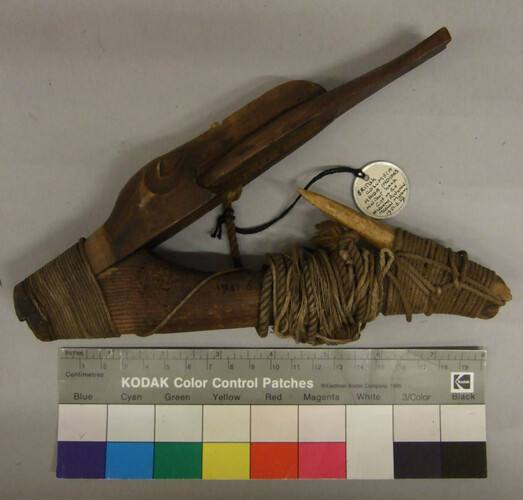 1951.6.59Wooden halibut hook with bone barb lashed on and carved with a bird swallowing a fish. [CAK 26/06/2009]1951.6.59
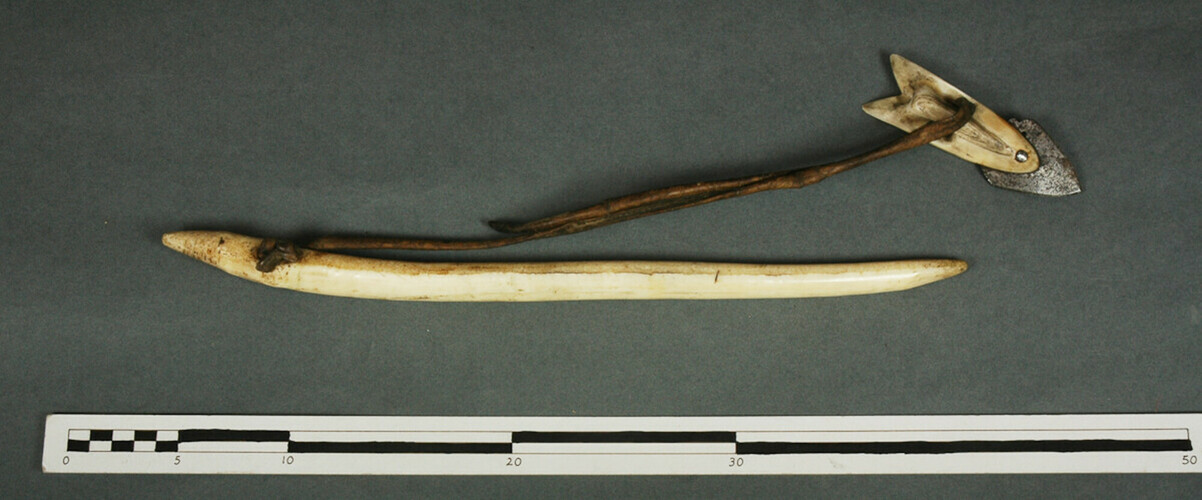 1886.1.678.2Top part of a harpoon: ivory spike with iron-bladed head. [El.B 01/03/2012]1886.1.678.2