
- Collection type
- Object
- Description
- Wooden 3-legged headrest with anthropomorphic features [RTS 22/3/2005].
- Long description
- Headrest carved from a single piece of yellowish brown wood (Pantone 7509C). This is an example of 'found form', where a naturally occurring tree branch with subsidiary limbs coming off the main body to form feet has been chosen because its shape was particularly suited to the intended use. This was shaped by trimming off excess foliage, removing the outer bark covering, cutting the legs to the same height and carving either end of the seat for decorative effect. The result is a stylised form, usually designed to imitate an animal, but in this instance apparantly anthropomorphic. This consists of a horizontal seat that tapers to either end. The front end of this has been carved to form a triangular head, cut flat across the top and with 3 short horizontal cuts running across the front that seem to form the features of a human face when seen in profile (nose, lips and chin?). Behind this, the branch gradually widens, forming a long neck, with a raised rectangular bar across its base that forms a frame for the edge of the seat area. This is rectangular, and although it has been largely cut flat across its upper surface it maintains a very slight convex curve across its width, and concave curve across its length. There is a slight raised knob on the other end of this, then the branch becomes round in section again before ending in a rectangular knob, mirroring the dimensions of the carved head opposite but lacking any further carved features. The underside of the seat retains the curve of the parent branch. Three legs extend from this area, one each at front and back, both angled out on the same side, and a third leg splaying out in the opposite direction from closer to the centre. They have all been cut along their bases, but irregularly, so that they tend to rest on the inside face of the foot in each case. The centre foot in particular shows strong wear on its underside, indicating the headrest has been used. The surface of the wood still shows numerous shaving and cut marks, but has also been polished. The hearest is complete, with some flaws and knots in the wood, and the wood has begun to split along the seat, and up the legs from their bases. It is quite heavy, weighing over 1000 grams, with a total length of 585 mm. It has a maximum height of 250 mm; the seat is 56 mm wide and 53 mm thick, while the central leg has a diameter of 30.5 by 29 mm [RTS 22/3/2005].
- Geographical reference
- Northern Bahr el Ghazal Dhangrial Wun Rog Mayen
- Cultural groups
- Dinka Tuich
- Date / Period
- Date made: Before 1979
- Date collected
- 20 February 1979?
- Acquisition information
- Purchased: 1979
- Materials and processes
- Material Wood Plant, Process Carved, Process Polished
- Dimensions
- Length: max 585 mm, Height: max 250 mm, Width: max 357 mm, Width 56 mm seat, Weight 1000 g
- Object numbers
- Accession number: 1979.20.88 Other numbers: Langton Collection 203
- Research and responses
At the time this object was collected, the Bahr el Ghazal province was bordered by the Upper Nile Province to the east and Western Equatoria to the south; this area is now divided into the districts of Western Bahr el Ghazal, Northern Bahr el Ghazal, and parts of Warab and El Buheyrat. Dhangrial, Wun Rog and Mayen lie within Northern Bahr el Ghazal. For a map showing the distribution of Dinka Tuich groups, see J. Ryle, 1982, Warriors of the White Nile: The Dinka, p. 25.
The original typed list does not give a collection date, but this item occurs between items 199 and 206, both of which were obtained on 20/2/1979. The item that Langton compares this with, 1979.20.86, is described by her as a 'Wooden headrest in bovine form, used as pillows and for sitting on by men, and for sleeping on by old women. Formerly made by specialist men but now made by anyone'. It is not clear if this particular version could also be used as a stool, and the features here seem more human than bovine [RTS 22/3/2005].
Search terms: Furniture Dwelling, Figure, Headrest, Animal Figure, Furniture
Further items to explore
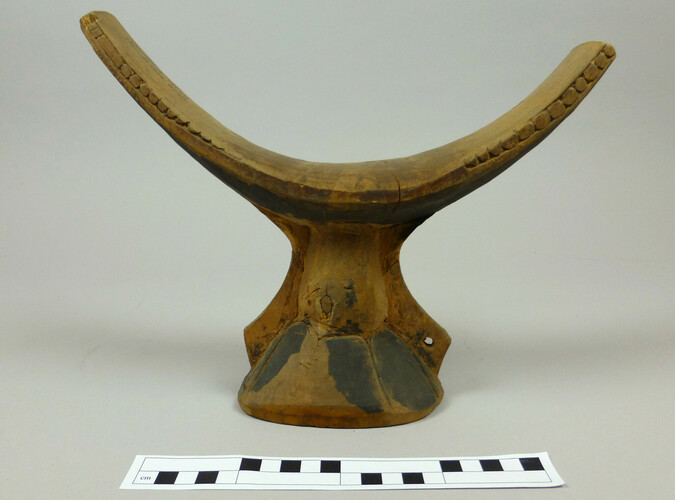 1898.56.1Wooden headrest carved from a single piece of wood. Decorated with painted designs in black pigment. [SM (Verve) 08/01/2014]1898.56.1
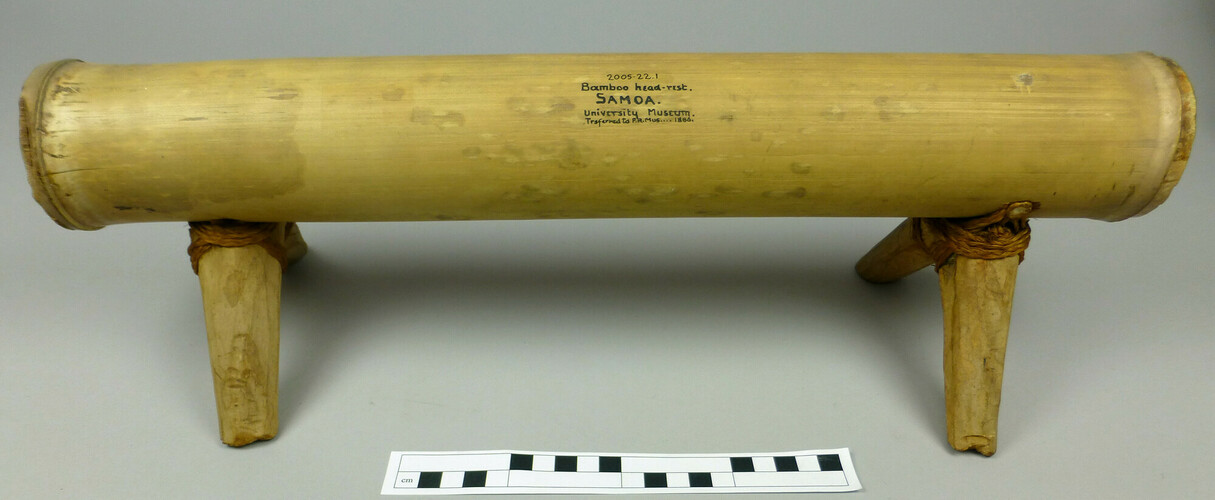 2005.22.1Bamboo tubular headrest with two V-shaped carved wooden legs that are bound at either end to the bamboo through perforations with plaited plant fibre. [SM (Verve) 12/02/2014]2005.22.1
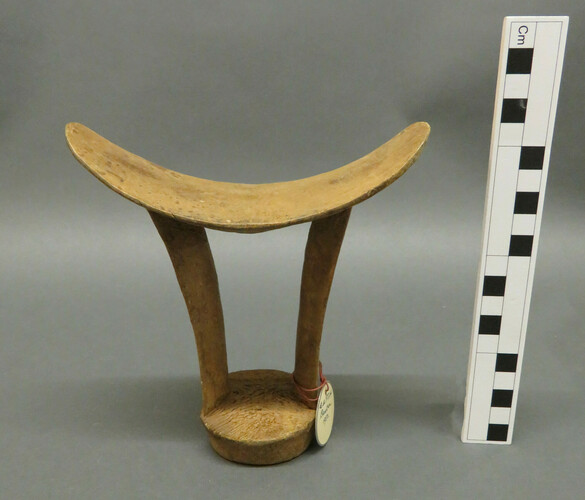 1953.8.69Light coloured wooden headrest carved from a single piece of wood. Oblong concavely curved seat with two, flat curved legs supporting it. The foot is deep and circular. [MOBB [OPS move] 21/3/2017]1953.8.69
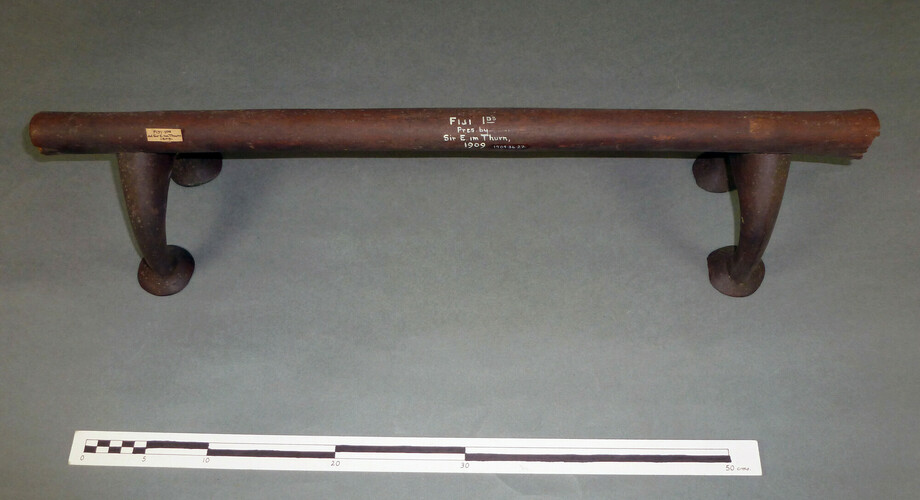 1909.34.27Wooden headrest (kali). The headrest has a cylindrical wooden crossbar U shaped legs round in section with flat rounded feet. [FB 28/11/2012]1909.34.27
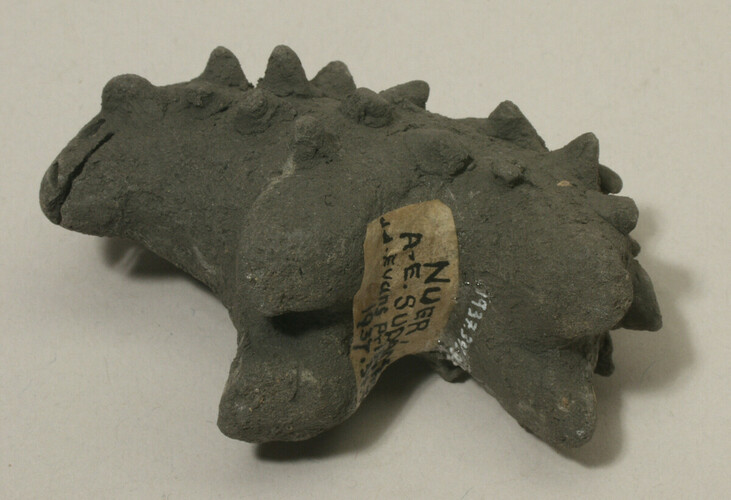 1937.34.70Hand modelled clay figure of a hedgehog with a spiky back, used as a toy [RTS 6/7/2004].1937.34.70
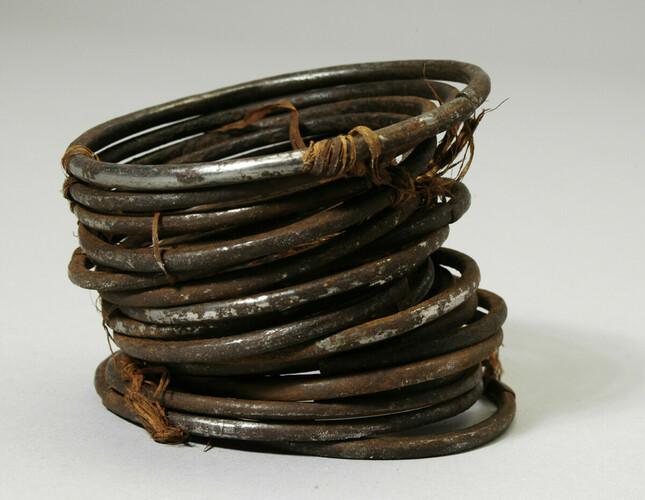 1966.1.518.1Group of 20 circular iron rings linked together by bark fibre strips, worn as an arm or leg ornament [RTS 21/7/2005].1966.1.518.1
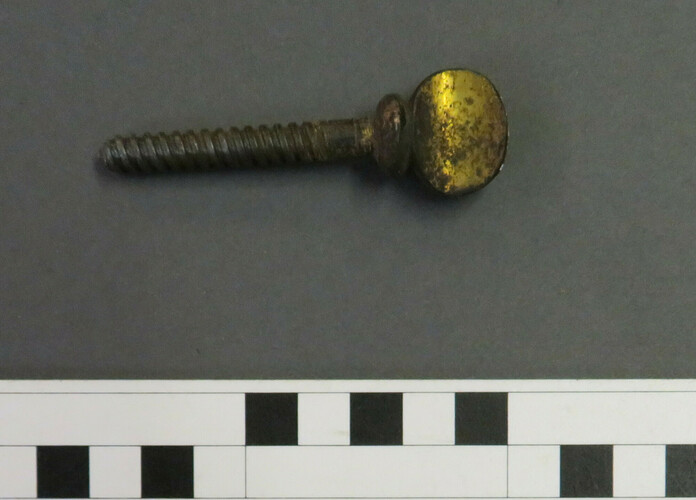 1929.72.1.8Brass screw. For the associated components of this loom see 1929.72.1 .2 - .8 [BS [OPS Move] 12/5/2017]1929.72.1.8
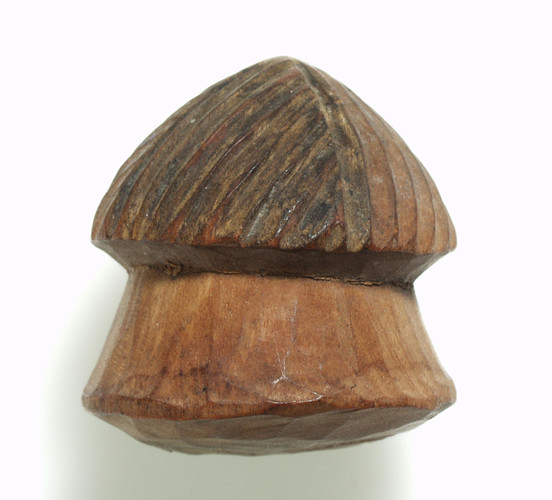 1884.84.86Cylindrical wooden lip stud with hatched, conical top, worn by women in their lower lip [RTS 10/5/2004].1884.84.86