
- Collection type
- Object
- Description
- 2 pieces of goatskin, worn as a shirt by men [RTS 16/2/2005].
- Long description
- [.1] Almost lozenge-shaped piece of supple brown goatskin, cut with a point at one end, widening towards the centre of the piece, and then tapering in slightly to the other end which has a convex edge. The outer surface has been scraped clean of hair, except for four triangular patches, arranged in pairs near either end of the piece, where areas of buff hair have been left intact (Pantone 7401C). There are a few holes around the body, many of which appear to be accidental; a few holes along the edges may be deliberate, but it is difficult to be certain. There are 2 areas that have been repaired. One of these has the remains of older hide stitching, partially overstitched with brown cotton yarn (Pantone 465C); the same thread has been used for an additional mend on the opposite side of the object. The skin is stained red on both surfaces (Pantone 469C). The piece has a weight of 184.4 grams, is 1005 mm long and measures 444 mm wide across its centre. [.2] Roughly square piece of supple brown goatskin, cut with a slightly convex base with a series of triangular points along the edge, irregular but roughly straight sides, and a concave upper edge with a semicircular cut out in the centre, presumably where the neck would be fitted. It is not clear if this was to be worn at the front or the back. The outer surface has been largely scraped clean of hair, except for 7 patches of buff hair that have been left spaced along the lower edge, and a single patch on the upper right and left corners of the upper edge (Pantone 7506C). These look to have been left deliberately; they correspond with each pointed section of the base edge and are quite symmetrical; they also add extra weight and stiffening to these places that may help the piece hang correctly. There are a few holes around the edges, some perhaps from pegging out the hide to dry during the preparation stage; other holes further in from the edges may be deliberately made to allow another material, such as the front piece, or string, to be passed through. This might include 2 largish slits on either side of the neckline, and 2 holes cut near the edge of one side, spaced some distance apart. There is also a local repair, in the form of 2 short rows of hide stitching close to one another near the opposite side edge. The piece is complete, but has some holes through the body that are probably damage, and there is a strong crease running down the centre where it has been folded in half. There is a strong red colouring over part of the body, especially on the outer face, that probably represents deliberate ochre staining (Pantone 469C); the underside of the garment is a lighter yellowish brown colour (Pantone 7509C). An unusual feature are 2 v-shaped groups of lines, a darker red than the surrounding hide, on opposite sides of the lower part of the garment. These may be a decorative device. The piece has a weight of 355.4 grams, and is 670 mm long, 660 mm across the upper corners and 770 mm wide across the centre of the body. The 2 hide pieces are quite different in shape, but cut from similar material while sharing some similarities of design, such as in the patches of hair that are left at strategic places around the border. It would appear that they were intended to be treated as related garments for the upper body, presumably to be worn together, although the exact manner of their use is not entirely clear [RTS 16/2/2005].
- Geographical reference
- [Equatoria] Eastern Equatoria Torit Xapari
- Date / Period
- Date made: Before 1940
- Date collected
- By 1940
- Acquisition information
- Loaned: 07/1940
- Materials and processes
- Material Goat Skin Animal, Material Animal Hide Skin, Material Cotton Seed Fibre Yarn Plant, Process Perforated, Process Repaired (local), Process Stained, Process Decorated
- Dimensions
- Length 1005 mm [.1], Width 770 mm across centre [.2], Width 660 mm across upper corners [.2], Width: max 444 mm [.1], Length 670 mm [.2], Weight 184.4 g [.1], Weight 355.4 g [.2]
- Object numbers
- Accession number: 1940.7.091.1 Accession number: 1940.7.091.2
- Research and responses
A province known as 'Equatoria' or 'Al Istiwa'iyah' was in existance from some time in the 1940's to 1981, after which point it was divided into the districts of Eastern and Western Equatoria; in the 1990's these were subdivided further into the modern administrative districts of Western Equatoria, Bahr el Jebel, and Eastern Equatoria. Torit is located in Eastern Equatoria; it may have been used here as a district reference rather than pointing to the town itself, unless Xapari is a suburb of Torit. However Xapari has yet to be identified as a place name.
It is assumed, from the similarities between these pieces and the way they are described by Powell that they were intended to be two parts of the same object and worn together [RTS 8/3/2005].
Further items to explore
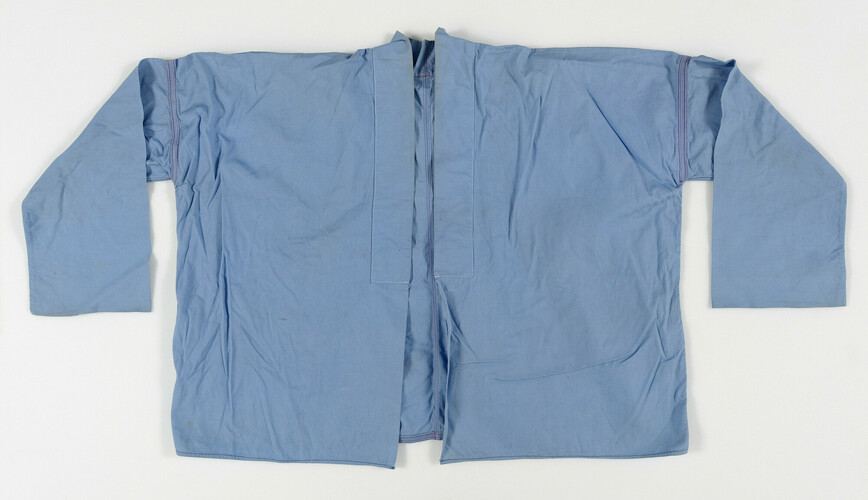 2009.135.71.1Cotton shirt, part of a woman's costume. [see 2009.135.71 .2-.9 for the other parts of the costume]. [FB 01/06/2012]2009.135.71.1
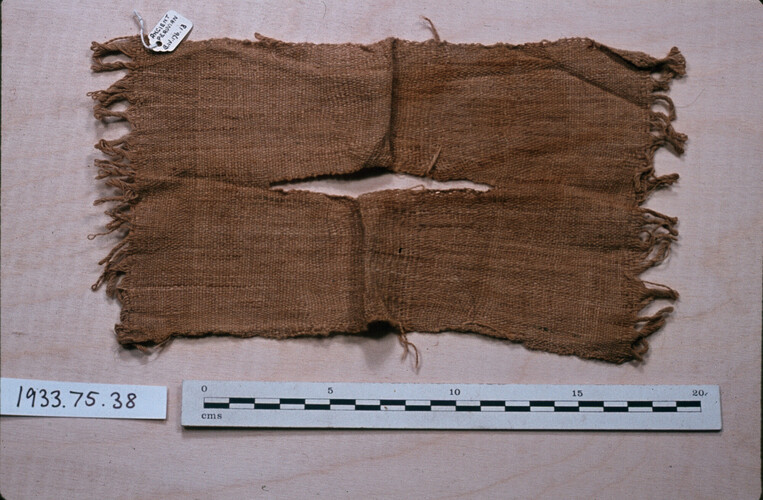 1933.75.38Textile garment; a miniature shirt or poncho1933.75.38
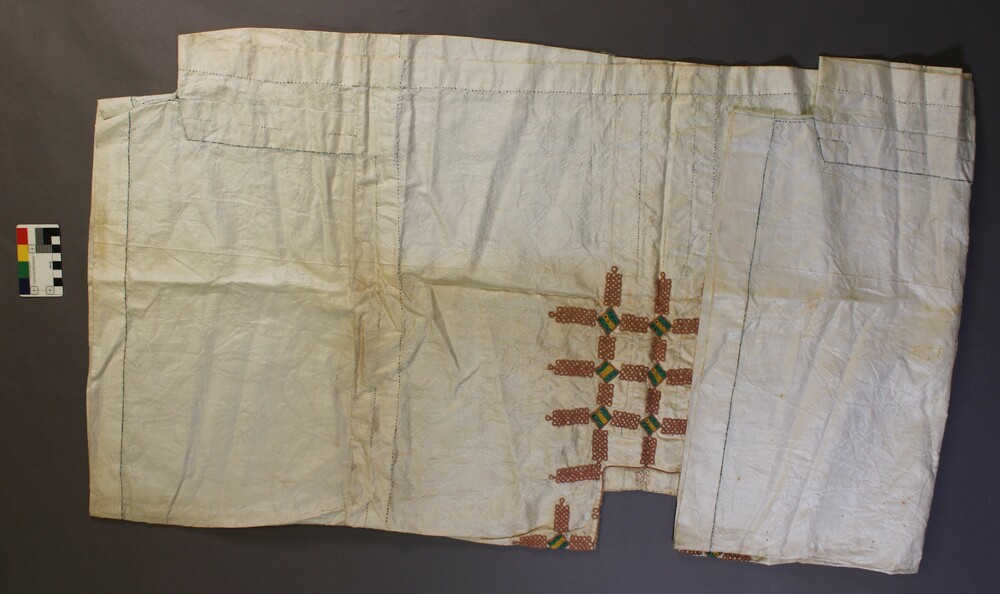 1940.7.0267Wide sleeved upper garment of European material with native embroidery at neck1940.7.0267
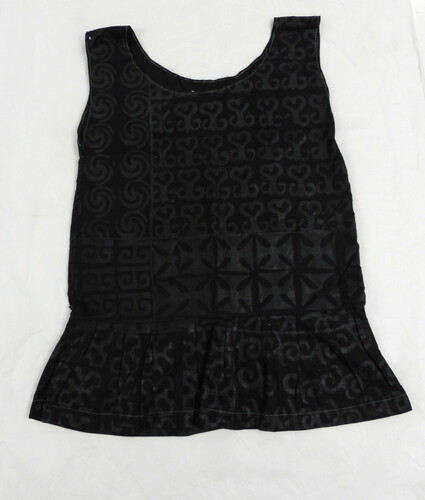 1933.44.13Cotton bodice or shirt dyed with indigo and with wood-block printed designs.1933.44.13
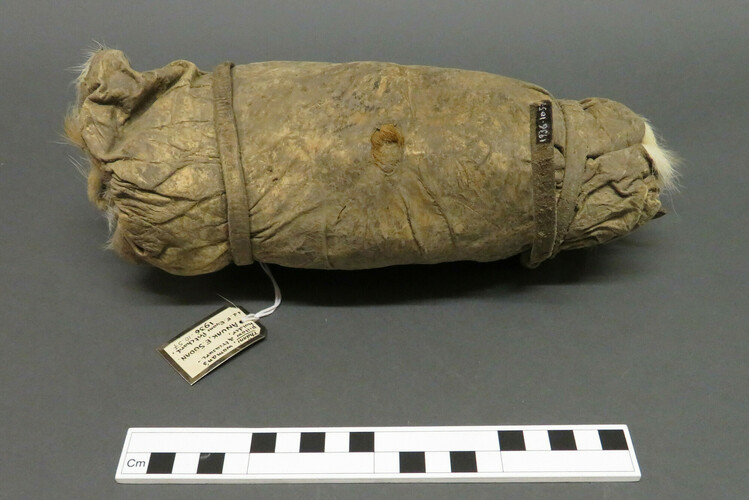 1936.10.57Cylindrical bundle made from a rolled up length of hide with animal hair still attached, used as a pillow and treasure bundle [RTS 17/5/2005].1936.10.57
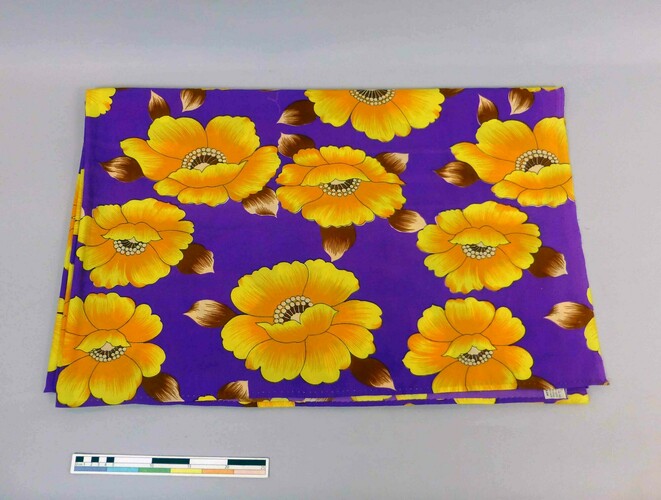 2014.69.2Piece of brightly coloured material worn by Dinka women. [FB 27/10/2014]2014.69.2
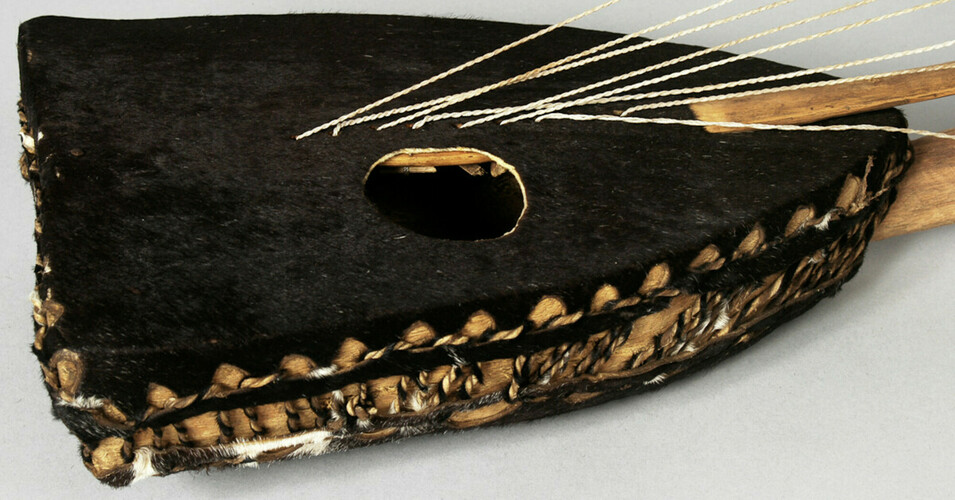 1985.24.1Bow harp with hide-covered resonator and 9 strings [RTS 23/9/2005].1985.24.1
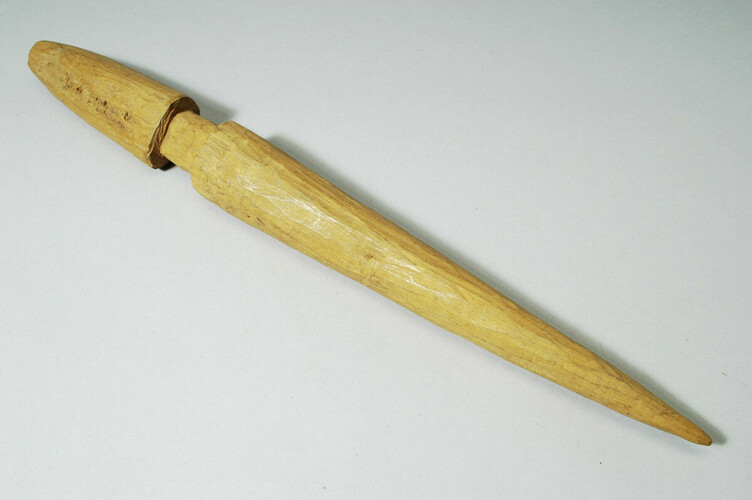 1945.10.96Wooden peg with recess cut into upper body and pointed end, used for tethering cattle [RTS 28/6/2005].1945.10.96