
- Collection type
- Object
- Description
- Drawing of a stone tool from two sides. [El.B 26/11/2008]
- Geographical reference
- England Devon Axminster Hawkchurch Broom
- Date / Period
- Date made: Before 1947 Archaeological period: Palaeolithic
- Date collected
- By 1947
- Acquisition information
- Purchased: 1947
- Materials and processes
- Material Ink, Material Paper Plant, Process Drawn
- Dimensions
- Length: max 200 mm, Width: max 201 mm
- Object numbers
- Accession number: 1947.2.12B
- Research and responses
http://www.shes.rdg.ac.uk/SHESresearch/Archaeology/Prehistoric/Broom/background.htm
The Broom gravel pits are located within the valley of the River Axe, on the border between Devon and Dorset ... There has been a long tradition of archaeological and geological research in this region. John Evans made the earliest references to Palaeolithic materials along the Axe Valley in 1872 (the first edition of Ancient Stone Implements), when he referred to four palaeoliths found by workmen erecting telegraph posts between Axminster and Chard (Evans 1872: 559). In 1878 subsequent discoveries were made in the Hawkchurch Railway Ballast pit (at Broom) by W. S. M. D'Urban (curator of the Exeter Museum). Gravel had been removed to a depth of 12m, only 3m above the current river level, while at other pit the depth of the gravel was recorded as being lower than the river level. D'Urban observed the variety of artefact states present in the assemblage, with materials occurring in both sharp and waterworn states. Gravels were subsequently exploited at Kilmington, Chard Junction, and in new pits in the Broom area (to the north and south of Holditch Lane), which were worked in the 1930's and 1940's.The trade in palaeoliths during the late 19th and early 20th centuries is well known (Roe 1981), and Broom was no exception. ... [AP 03/08/2006]
Palaeolithic implements found at Axminster in the Broom or Kilmington pits are listed on the English Heritage maintained National Monuments Record under monument no. 1067395. This record can be accessed online as http://pastscape.english-heritage.org.uk/hob.aspx?hob_id=1067395 [CB 30/10/2009]
Search terms: Picture and Graphic Art, Tool, Drawing
Further items to explore
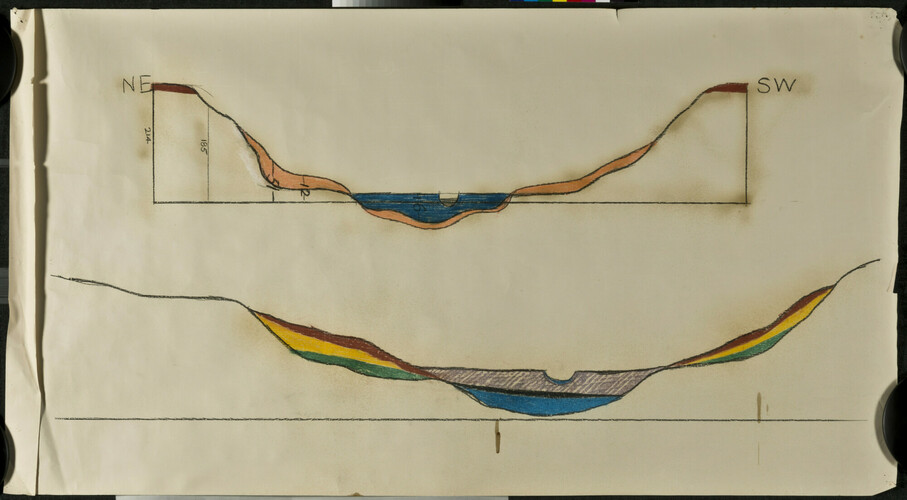 1944.1.45Drawing of two valley sections1944.1.45
 1994.15.1426Drawing in pencil of a man, woman and a child. The child is holding a toy hoop. [SM 04/03/2008]1994.15.1426
 1994.15.2217Paper collage with figures drawn in wax crayon and cut out. [El.B 13/05/2008]1994.15.2217
 1971.30.3.8Part of a metal drawing instrument [ SM (Verve) 12/6/2017]1971.30.3.8
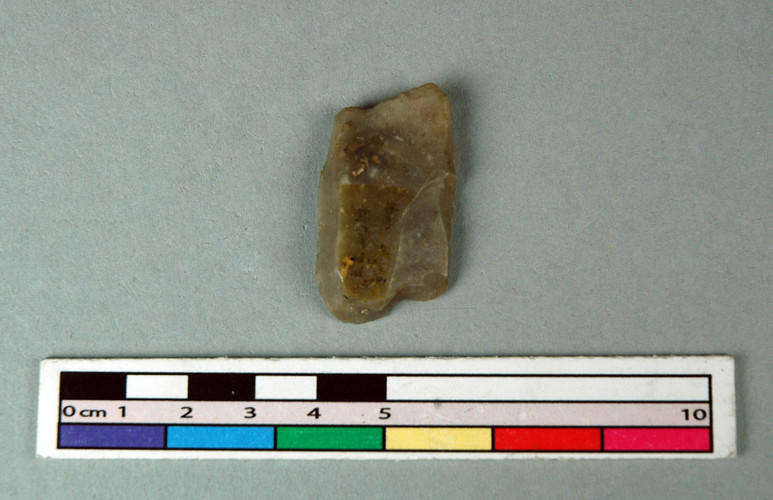 1892.60.59Side scraper with retouch on the right dorsal face. No retouch on ventral face. [MN 06/04/2010]1892.60.59
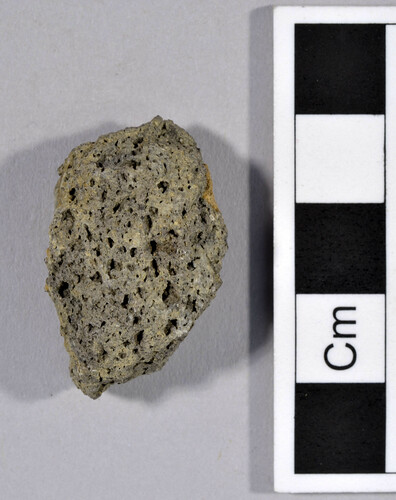 1884.140.1323.17Ceramic pellet1884.140.1323.17
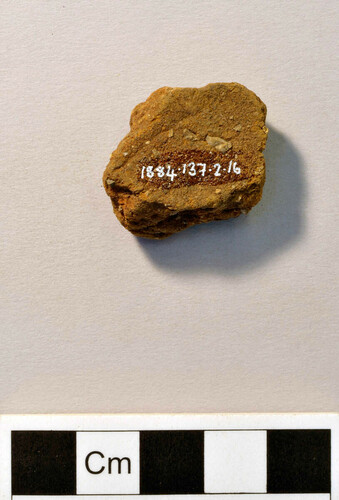 1884.137.2.16Ceramic sherd1884.137.2.16
 1884.138.7.13Ceramic sherd1884.138.7.13