
- Collection type
- Object
- Description
- Apron or waist ornament, made of cotton string and beadwork in a cross pattern in pink and green on a white background. [N.B. 'DCF 2004-2006 What's Upstairs?' 7/6/2005]
- Geographical reference
- Cultural groups
- Macusi
- Date / Period
- Date made: Before 1939
- Date collected
- By 1939
- Acquisition information
- Purchased: 1939
- Materials and processes
- Material String, Material Cotton Seed Fibre Yarn Plant, Material Bead, Material Net Textile, Process Netted, Process Beadwork
- Dimensions
- Length: max 133 mm, Width: max 185 mm
- Object numbers
- Accession number: 1939.7.10B Other PRM accession number: 1939.7.B 10
- Research and responses
Related Documents File - Correspondence between Walter Grainge White and Thomas Penniman, determining which items offered by Grainge White would be purchased by the Museum. There are notes written on Grainge White's letters by Penniman's assistant that indicate the items that were of interest, or too expensive and which could be returned. Excerpt from Grainge White's letter: 'But BEAD aprons are not original Makuchi. They used coloured seeds for beads. Now they obtain by barter European or American beads!! -- saves time and trouble!!' [GI 10/12/2001]
Peter Riviere has supplied the following information about beaded women's aprons from British Guyana: 'On highdays and holidays, or festivals, the only covering which the females wore was the quieyoo, an article of dress, worked out of seeds of trees, about ten inches long, and six or eight broad, hung in front of the person by a string fastened round the loins. These are now tastefully worked with beads to represent the flowers, fruits and animals around the Indians in the bush, and will cost from six to ten shillings when sold to Europeans.' (p. 261, Rev Robert Duff, British Guiana, being notes on a few of its natural productions, industiral occupations, and social institutions. Thomas Murray & Co., Glasgow, 1866) (Laura Peers, 16/11/2007)
Search terms: Clothing, Ornament, Trade, Apron, Waist Ornament, Groin-cover
Further items to explore
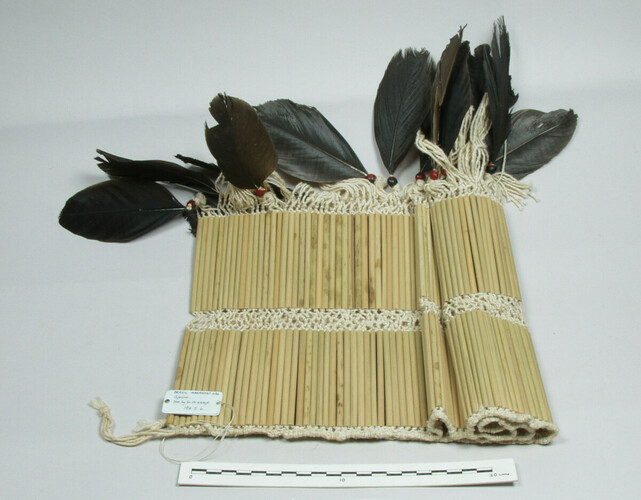 1981.5.6Apron of stringwork with lengths of reed, and feather and bead decorations. [N.B. 'DCF 2004-2006 What's Upstairs?' 21/4/2005]1981.5.6
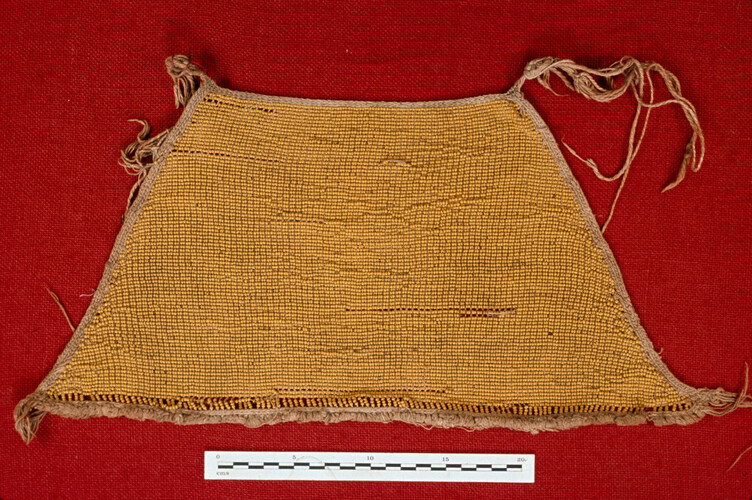 1941.3.2Beadwork apron, of plain yellow beads, with a short yellow beadwork fringe and with tie cords. [N.B. 'DCF 2004-2006 What's Upstairs?' 26/7/2005]1941.3.2
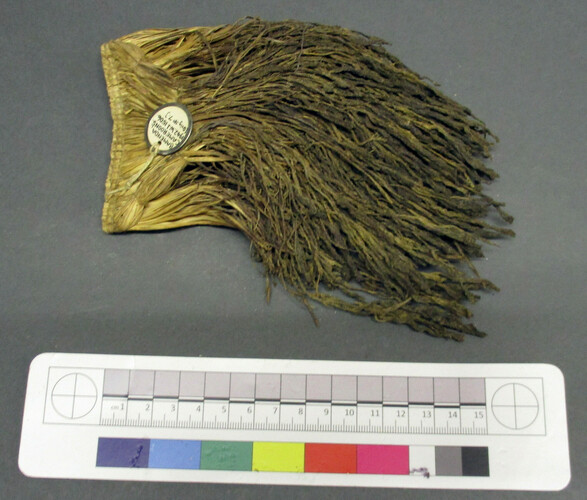 1942.13.1506Waist ornament, string apron. Comprised of grass bound together in bundles, the fringe apparently smeared with cow dung. [ASh [OPS move] 13/12/2016]1942.13.1506
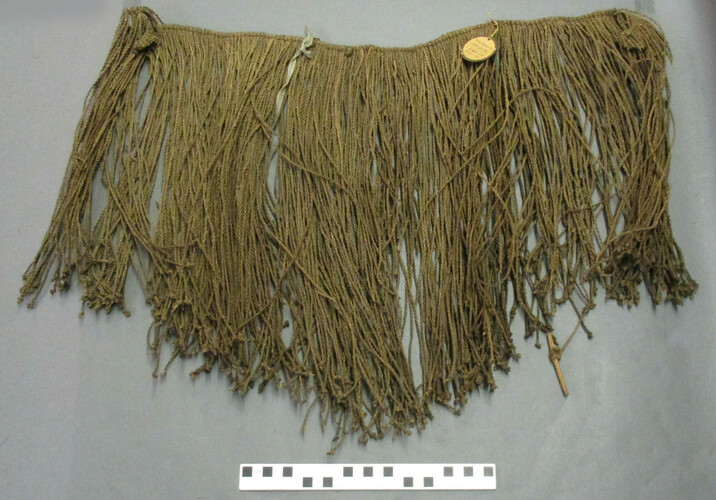 1893.67.190Dance apron of twisted plant fibre cords.1893.67.190
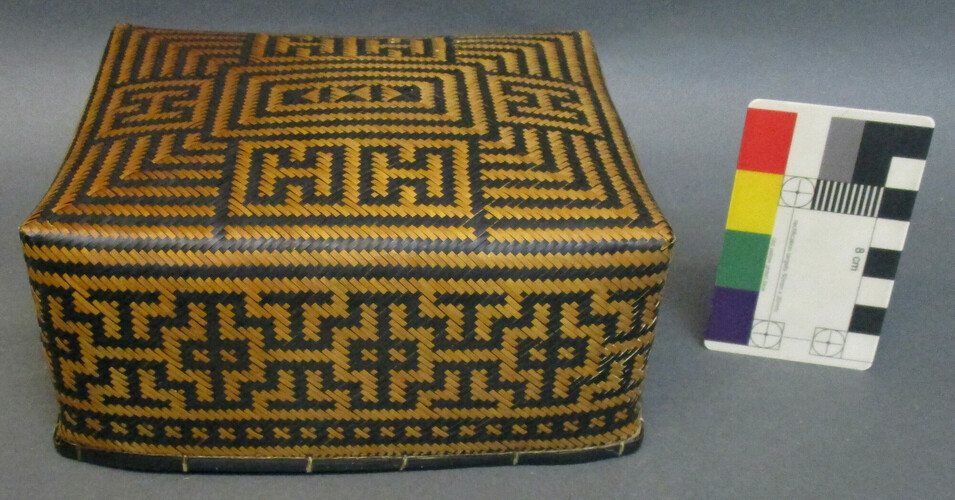 1884.43.21.2Rectangular basketry box lid. For the basket base please refer to 1884.43.21 .1 [BH [OPS Move] 18/11/2016]1884.43.21.2
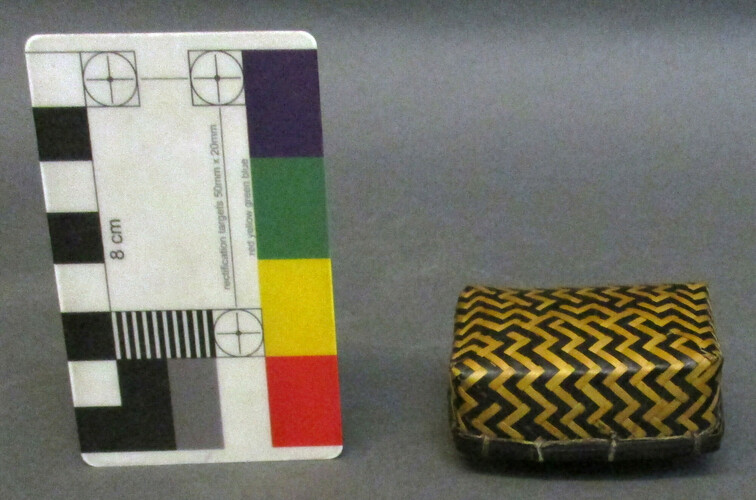 1884.43.20.5Rectangular basket and basketry lid.1884.43.20.5
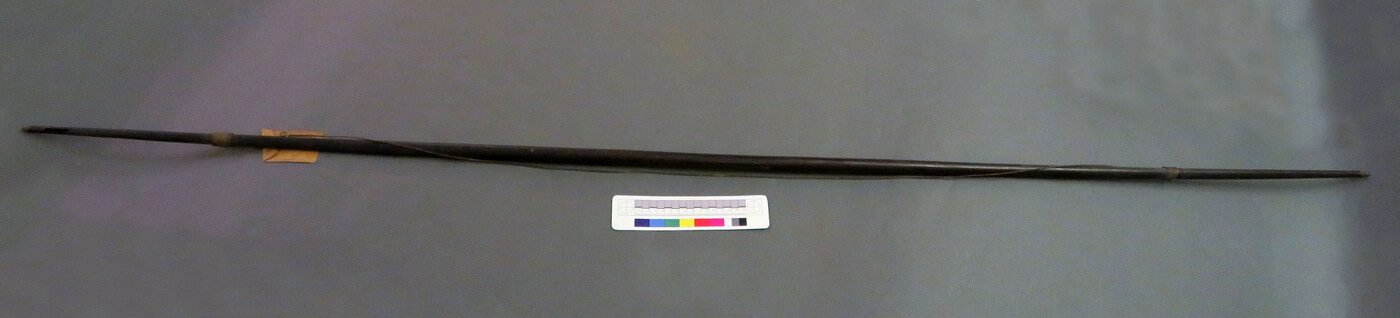 1941.3.115Bow, made from wood with a plant fibre string. [ASh [OPS move] 24/7/2017]1941.3.115
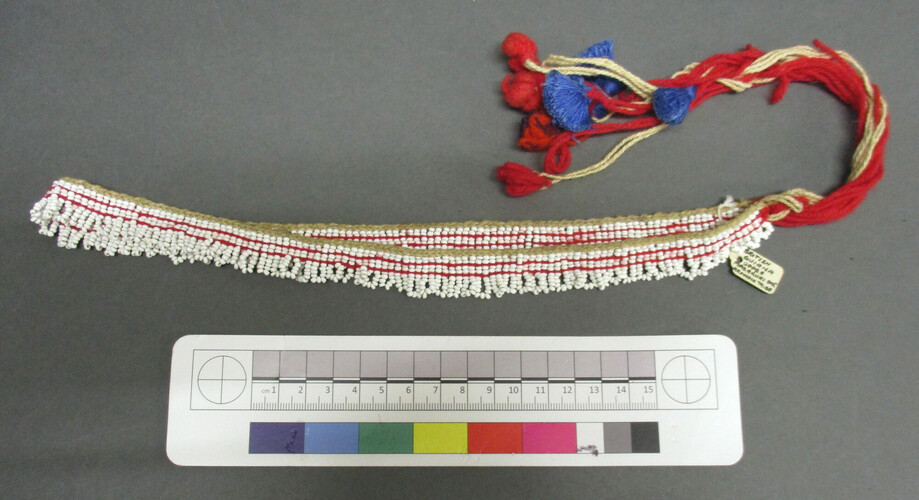 1954.2.90Necklace composed of white trade beads & wool, strung on cotton. Red wool streamers & blue trade silk tassels at the ends of the ties. [ASh [OPS move] 9/12/2016]1954.2.90