
- Collection type
- Object
- Description
- Exchequer tally.
- Geographical reference
- England
- Cultural groups
- English
- Date / Period
- Date made: Before 1821
- Date collected
- By 1933
- Acquisition information
- Purchased: 1933
- Materials and processes
- Material Wood Plant, Process Notched, Process Sawn
- Dimensions
- Length: max 678 mm
- Object numbers
- Accession number: 1933.90.1
- Research and responses
http://www.scienceandsociety.co.uk/results.asp?image=10318891&wwwflag=2&imagepos=7: Tally sticks were a method of accounting for loans and payments used by the Treasury until 1826. Notches were cut into wooden sticks according to a code representing sums of money, date, payee and other information. The sticks were then split down the middle with the Exchequer keeping one half and the debtor the other. When the debt was due to be paid, the two halves were matched to see if they 'tallied'. If they did not, this was evidence of fraud. In 1834, a fire burning old tally sticks got out of control, causing serious damage to the Houses of Parliament.
http://en.wikipedia.org/wiki/Tally_stick: ... The most prominent and best recorded use of the split tally was in medieval England as a tool of the Exchequer for the collection of taxes by local sheriffs (tax farmers “farming the shire”). The split tally of the Exchequer was in continuous use until 1826 (see also: Burning of Parliament) and the system of tally marks of the Exchequer is described in The Dialogue Concerning the Exchequer (see Literature below) as follows: "The manner of cutting is as follows. At the top of the tally a cut is made, the thickness of the palm of the hand, to represent a thousand pounds; then a hundred pounds by a cut the breadth of a thumb; twenty pounds, the breadth of the little finger; a single pound, the width of a swollen barleycorn; a shilling rather narrower than a penny is marked by a single cut without removing any wood".
Search terms: Writing, Measurement, Tally
Further items to explore
 1896.29.50.1Hop-picker's tally [.1] and foil [.2].1896.29.50.1
 1899.12.36Gambling tablet or tally representing money.1899.12.36
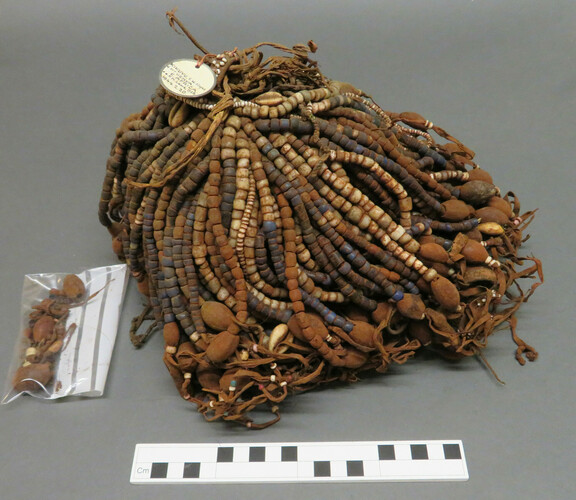 1944.2.20Beaded tassel suspended from a decorated leather plate. [AF [OPS Move] 10/5/2017]1944.2.20
 1899.12.37Gambling tablet or tally representing money.1899.12.37
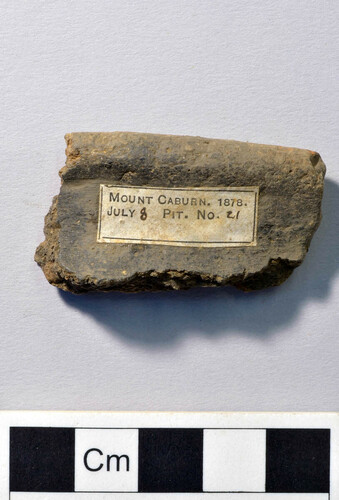 1884.137.5.13Ceramic rim sherd1884.137.5.13
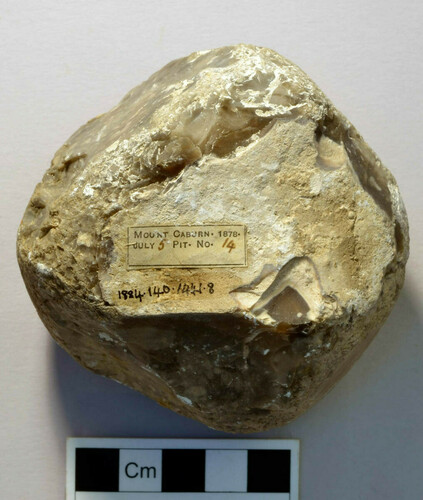 1884.140.1441.8Hammer-stone1884.140.1441.8
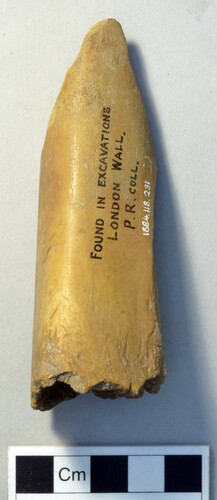 1884.118.231Bone point of distal femur of cattle (Bos) or deer (Cervus). Shaft worked to a blunt point. Hollow. Gnawed. [JW [Excav. PR] 04/06/2013]1884.118.231
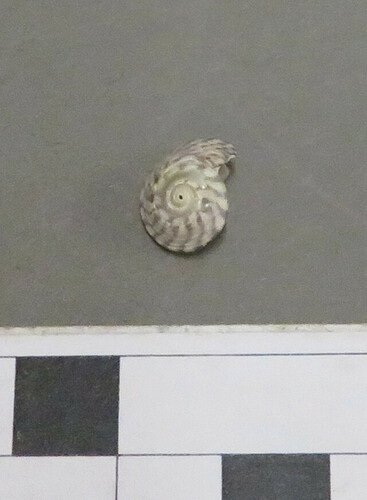 2017.242.1.5Shell from toy set. For associated wooden box see .1, for the piece of amethyst see .2 and for the other shells see .3 and .4. [AF [OPS move] 12/10/2017]2017.242.1.5