
- Collection type
- Object
- Description
- Narrow grey stone with shallow groove on the top half and the tip narrowed by use as a borer. [El.B 15/02/2008]
- Geographical reference
- Cultural groups
- Māori
- Date / Period
- Date made: Before 1930
- Date collected
- By 1930
- Acquisition information
- Purchased: 1930
- Dimensions
- Length: max 66 mm
- Object numbers
- Accession number: 1930.82.43
- Research and responses
For a general account of this collection, see page 185 of ‘The Faking of Maori Art’, by Henry Devenish Skinner and T. Barrow in Henry Devenish Skinner, Comparatively Speaking: Studies in Pacific Material Culture 1921– 1972 (eds. Peter Gathercole, Foss Leach, and Helen Leach), (Dunedin: University of Otago Press, 1974), pp. 181–92: 'The sale of "Maori artefacts" by Robieson through Stevens's auction rooms in London to a Pitt Rivers Museum buyer, accounted for in the 8 October 1930 catalogue entry, involved some seventy-six items, most of which are genuine. Adzes, flakes, chisels, obsidian scrapers, and broken pieces of nephrite ornaments make up the bulk of this material. The entire lot was sold for one English pound - Robieson must have indeed been in hard straits in the dismal depression conditions of the period to have sold so much for so little.' This is not one of the items identified by Skinner and Barrow as a fake. [JC 13 5 2003]
Search terms: Tool
Further items to explore
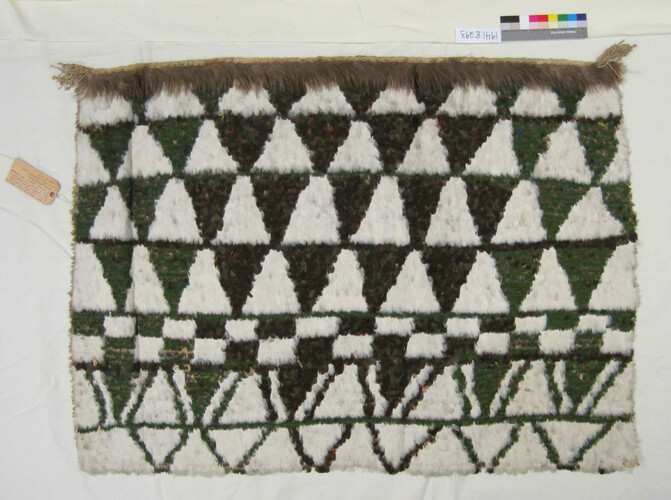 1941.8.293Cloak. Made of flax. Decorated with kiwi, peacock, pigeon, and parrot feathers.1941.8.293
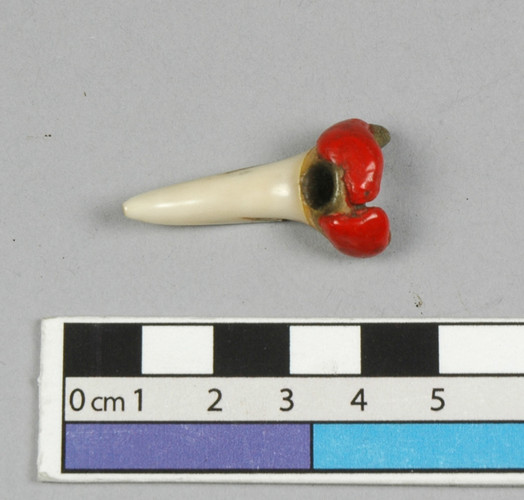 1923.87.224Ear pendant of shark's tooth with base covered with red wax. [El.B DDF Body Arts Project 2010/2011 22/11/2010]1923.87.224
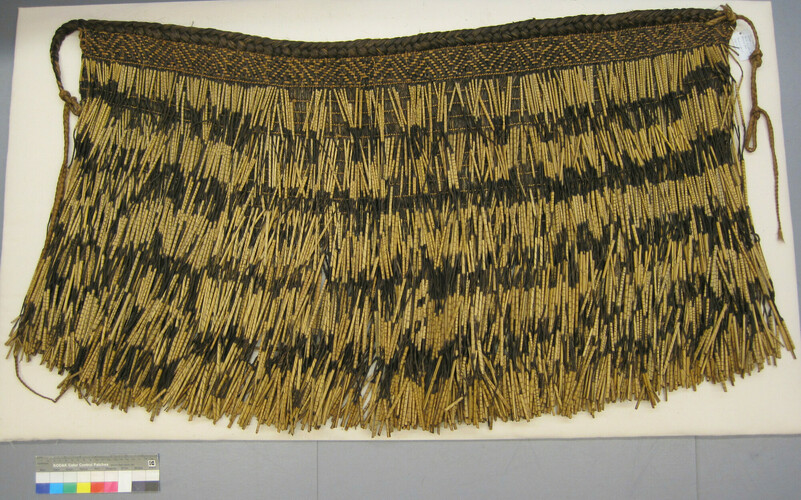 1989.51.1Woman's pihepihe or piupiu, shoulder cape or skirt of muka (New Zealand flax; Phormium tenax) with partly blackened pokinikini [striated pendants of rolled leaf] attached over surface.1989.51.1
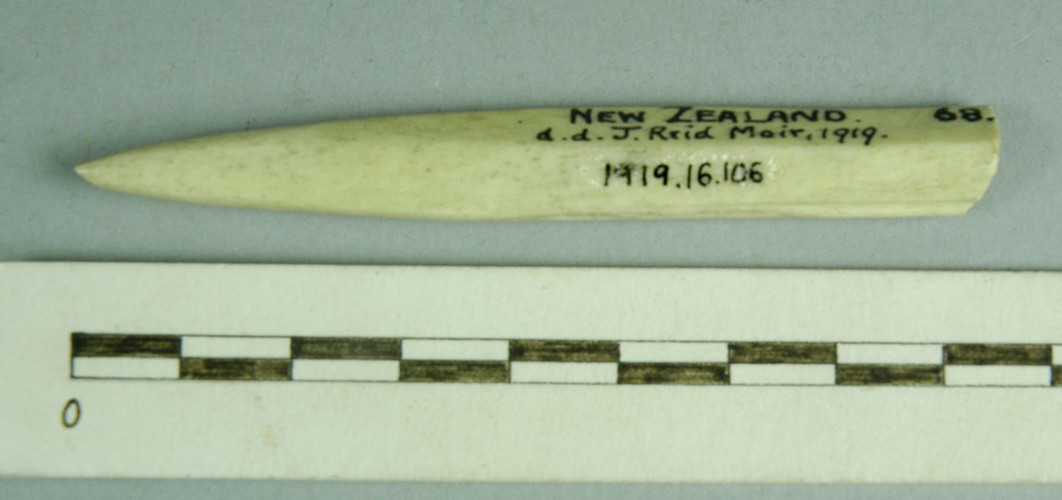 1919.16.106Fragment of bone, worked to a point. [MJD 02/04/2009]1919.16.106