
- Collection type
- Object
- Description
- Piece of albatross bone carved in supposed 'Maori' style. A forgery. [JC 12 5 2003]
- Geographical reference
- Cultural groups
- Māori
- Date / Period
- Date made: Before 1930
- Date collected
- By 1930
- Acquisition information
- Purchased: 1930
- Materials and processes
- Material Bird Bone, Process Carved, Process Incised, Process Perforated
- Dimensions
- Length: max 50 mm
- Object numbers
- Accession number: 1930.75.21
- Research and responses
For a general account of this collection, see page 182 of ‘The Faking of Maori Art’, by Henry Devenish Skinner and T. Barrow in Henry Devenish Skinner, Comparatively Speaking: Studies in Pacific Material Culture 1921– 1972 (eds. Peter Gathercole, Foss Leach, and Helen Leach), (Dunedin: University of Otago Press, 1974), pp. 181–92: 'The only clear evidence of Robieson's deceptive sale of his own work as genuine is the catalogue of the Pitt Rivers Museum, Oxford. An entry for 8 April 1930, pp. 128-129, records the acquisition of twenty-one "Old Maori" items sold for the sum of nineteen pounds by J. B. Robieson, of 24 Bromley Hill, Bromley, Kent. Genuine artefacts in this collection include adzes, a block of nephrite, and commonly occurring material such as partly made fish hooks. The decorated items in this group, which represent the supposedly most valuable part of the purchase, are made in a characteristic Robieson style. The falsity of this sale went unnoticed until 1956, when one of the authors [Barrow; see on] identified exhibited specimens as being from the hand of Robieson.' Skinner and Barrow go on to discuss particular items. They also note (note 7): 'The Pitt Rivers Museum catalogue records Robieson's initials as "J.N." however K. R. Cairns confirms his forenames as "James Frank". The recording of "B" for "F" is a probable error, due in this case it would seem, to the cataloguer'; and (note 8): 'T. Barrow on a research visit to the Pitt Rivers Museum detected Robieson and Little forgeries which were then on exhibit. Miss Beatrice Blackwood of the Pitt Rivers Museum, in a letter dated 10 December 1970, recalls the occasion in these words: "I remember very clearly Mr Barrow's visit in 1956 when he spotted the Robieson forgeries. We took them out of the display cases and put them in a drawer labelled "Forgeries" where they still are."' [JC 12 5 2003]
- Associated publications
- Illustrated in black and white as figure 12.4 and discussed in detail on page 184 of 'The Faking of Maori Art’, by Henry Devenish Skinner and T. Barrow in Henry Devenish Skinner, Comparatively Speaking: Studies in Pacific Material Culture 1921– 1972 (eds. Peter Gathercole, Foss Leach, and Helen Leach), (Dunedin: University of Otago Press, 1974), pp. 181–92: '12.4 "Toggle carved from the bone of an abatross's wing, for attachment to a hei-tiki as suspending toggle." (The heavy ridging of the ends of this toggle, which are similarly carved on the flute [1930.75.18) is not found on genuine toggles. This mannerism of style in Robieson's surface decoration may be compared with other examples of his work.' [JC 12 5 2003] The collection is also referred to on page 738 of ‘Pacific Arts, IV. Forgery’, by Robin J. Watt, in Vol. 23 of Jane Turner (ed.), The Dictionary of Art, no. 7, pp 737–8: 'He [Robieson] sold many on the open market, including some to the Pitt Rivers Museum, Oxford, in 1930.' [JC 12 5 2003]
Search terms: Reproduction, Tool, Ornament, Toggle
Further items to explore
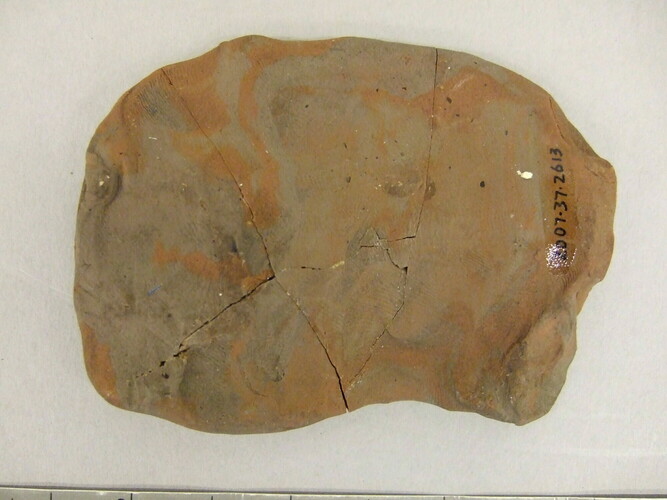 2007.37.2613Cast of bell founder's marks made of 'Plasticine'. Previously stored in a wooden cabinet. Found with no information or box number. [MdeA 24/9/2007]2007.37.2613
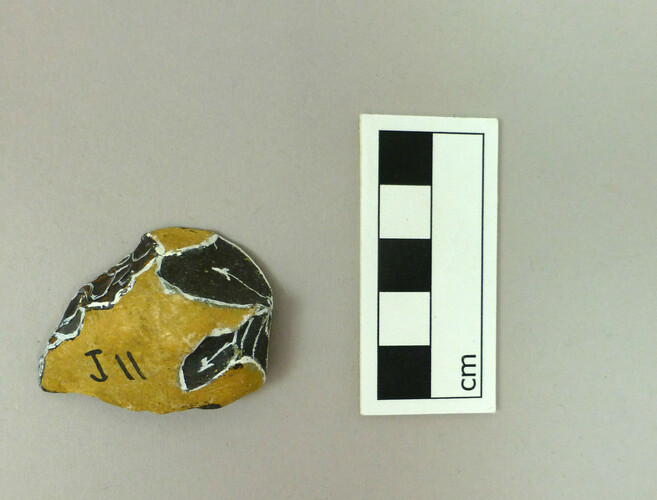 1940.12.161.11Cast of geological specimen with markings drawn in white.1940.12.161.11
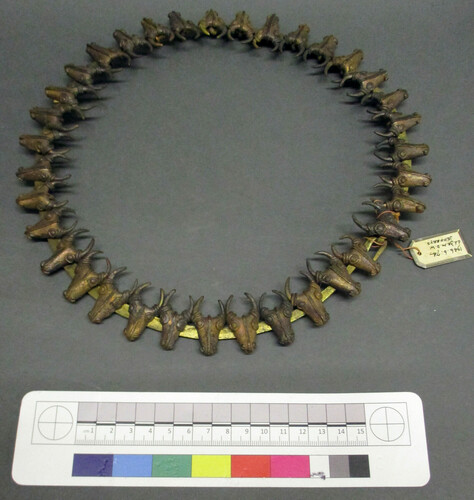 1946.6.74Collar, made from cast brass with modelled heads of the Bush-cow, riveted onto a band of brass. [ASh [OPS move] 14/12/2016]1946.6.74
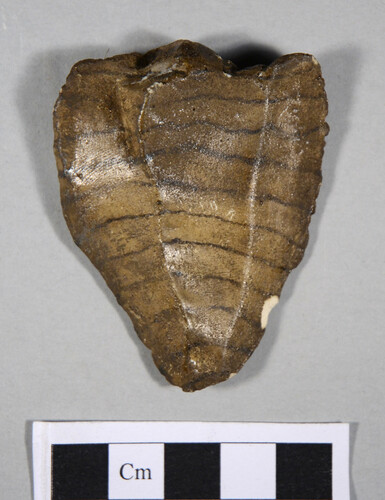 1911.55.11Cast of stone tool, painted mid brown. [MJD 05/12/2014]1911.55.11
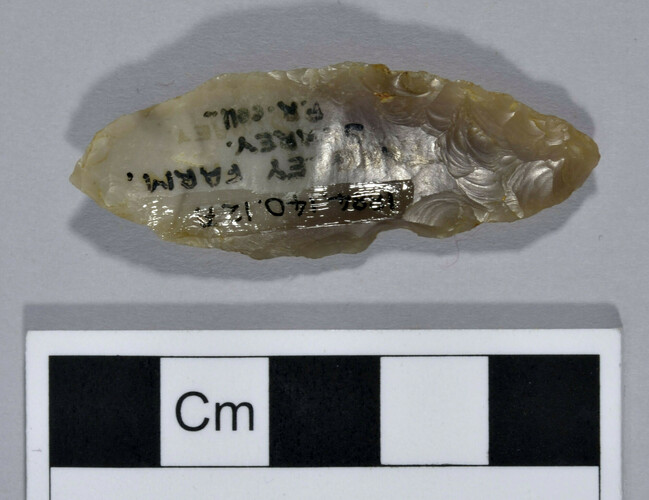 1884.140.1271Stone arrow-head1884.140.1271
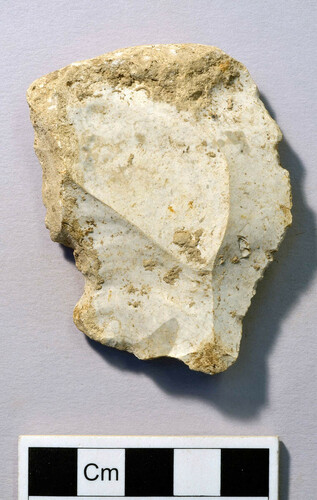 1884.137.17.51Stone flake1884.137.17.51
 1917.53.91Barbed and tanged arrow-head with bifacial retouch extending across both faces. Both barbs and the tang are broken. [MN 08/12/2008]1917.53.91
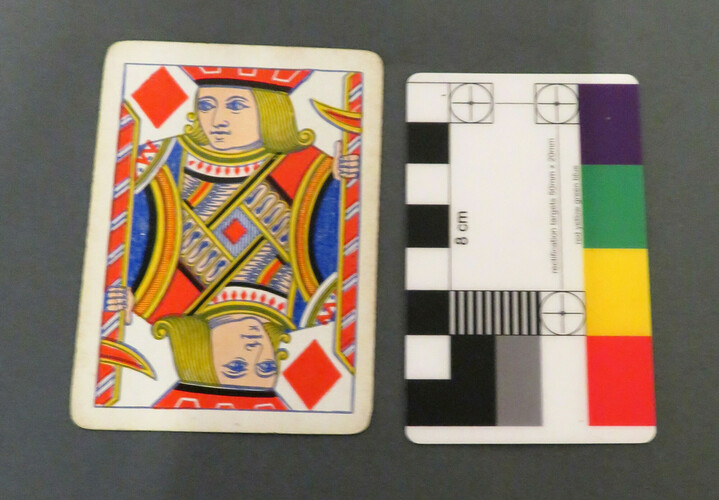 1992.8.3.108Playing card, jack of diamonds. Plain reverse. For the other playing cards in this incomplete set of 49, see [1992.8.3 .85 - 107] and [1992.8.3 .109 - 133]. [CW [OPS Move] 23/3/2017]1992.8.3.108