- Collection type
- Object
- Description
- Chequered Kente cloth
- Long description
- Rectangular piece of Kente cloth composed of four hand-woven strips of silk-cotton which are hand-sewn together along the selvedges. The warp ends have been left as a fringe at either end. Each strip of approximately 90mm is woven on a horizontal strip loom, primarily by men, and is decorated with alternating bands which once sewn together create a checkerboard pattern. There is a plain weave ground of yellow and each band includes geometric supplementary weft float designs in red, green and black.
The name of the cloth is recorded by the field collector Robert Powley Wild as Mampong Ahemba. The colours used in the cloths symbolic meanings; yellow for royalty and prosperity, red for bloodshed and mourning, and black for spiritual strength and maturity, Originally reserved for Ashanti royalty, kente is now worn during special ceremonies like weddings, births, and funerals.
- Date / Period
- Date made: Before 1948
- Date collected
- By 1948
- Acquisition information
- Found unentered: 1948
- Object numbers
- Accession number: 1948.2.2

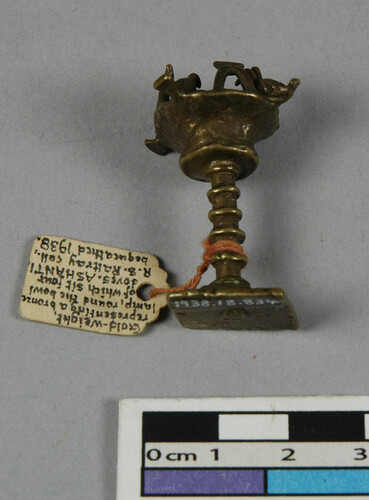 1938.18.834Brass cast weight representing birds around a bowl, used for weighing gold.1938.18.834
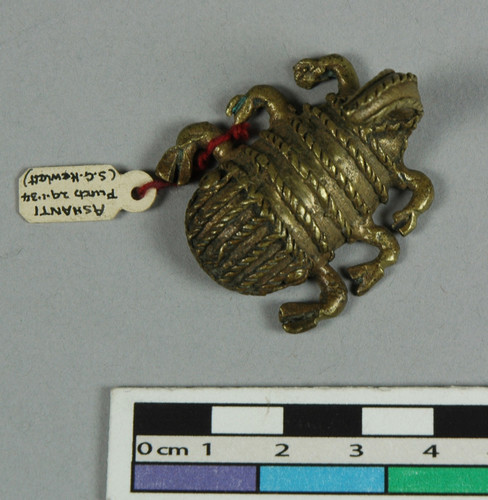 1934.63.48Copper alloy weight for weighing gold, in the form of a scorpion. [MJD DDF Body Arts Project 2010/2011 04/01/2011]1934.63.48
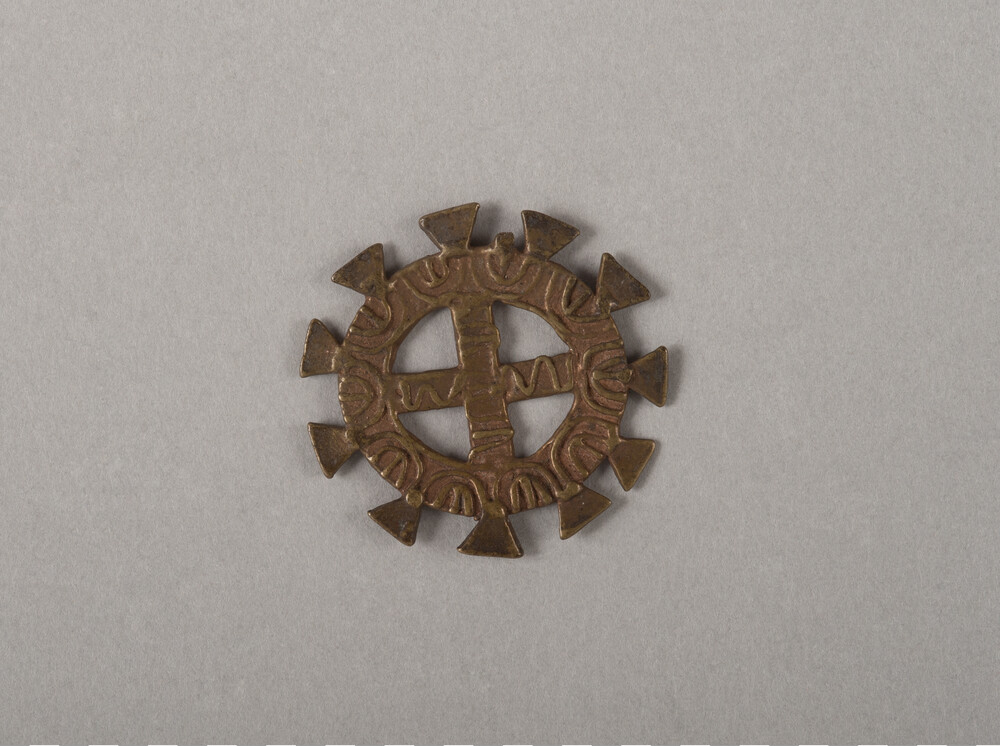 1949.7.15.32Copper alloy weight for weighing gold, in the form of a circle, a cross in the centre and rays around the edge. [MJD 27/06/2011]1949.7.15.32
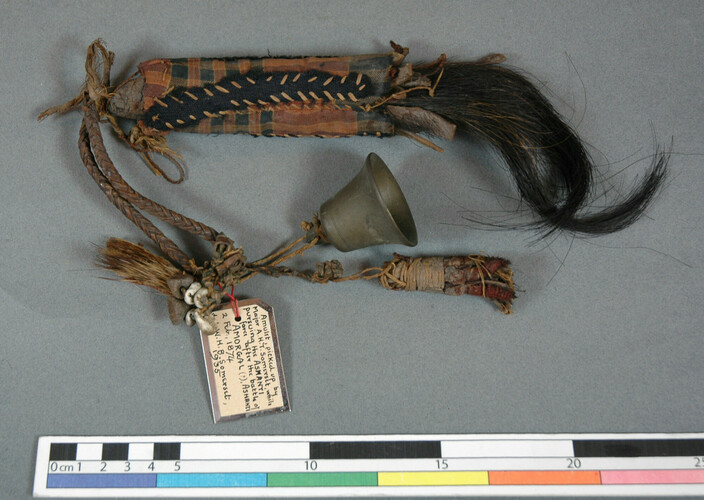 1935.29.5Amulet of hair tuft mounted on leather with a bell and other objects attached.1935.29.5