
- Collection type
- Object
- Description
- Mask with moveable parts.
- Long description
- The mask is constructed from four moveable sections; top of the head with horns and additional hair; forehead and temples; main facial features - eyes, nose,ears, cheeks; lower jaw and chin. There is a hooped earring in each ear. The top section of the mask is primarily red and the remaining sections primarily blue with white spots. [HR 11/1/2006]
- Geographical reference
- Date / Period
- Date made: Before 1922
- Date collected
- By 1922
- Acquisition information
- Purchased: 1922
- Materials and processes
- Material Papier-Mâché Paper Plant, Material Pigment, Material Textile, Material Hair, Material Metal Wire, Material Plastic Synthetic, Process Painted
- Dimensions
- Height: max 460 mm approx
- Object numbers
- Accession number: 1922.56.29
- Research and responses
The following information was provided by Elmer Veldkamp, Universitair docent Koreastudies, Leiden Institute for Area Studies (LIAS), School of Asia Studies Korea, via Dr. Laura van Broekhoven (who paraphrased and translated from Dutch). These comments were made after viewing a photograph of the object, and did not see the object in person. '...it is a strange object. I find it difficult as I have never seen a similar decorated object, but the description mentions an ‘artist’ so it might be that certain liberties were taken. It was bought during the Japanese occupation (in 1922) and there seem to be some Japanese influences too. The earrings (not entirely visible in the image) do not come across as typically Korean either to me. There are some Korean ‘demon’ or Tokkaebi masks that show similarities, maybe that is why the title of the object says ‘demon mask’. It also makes me think of some Hannya masks (these are demons from Japanese Noh theatre) which have similar facial expressions. The dotted patters do occur on Korean masks, but usually that will be to indicate diseases (as with the Hahoe masks) or acne.
To sum up: the title of the mask might be accurate, but it either is a very unique piece, or a piece that shows much hybridity.' These comments were sent on 14 May 2019. [MOBB 29/5/2019]
- Associated publications
- Published as a PRM postcard (date unknown) with the following caption: 'Demon mask of papier-mâché. Masks were used in traditional plays performed at festivals such as New Year, Spring and the birthday of the Buddha. 45c ms high, with movable parts. Korea (Given by Sir Francis Knowles in 1922).' [GI 19/11/2001] PRM Postcard (number 062) reprinted in 2000 with the following caption: 'Papier-mâché mask with moveable parts, representing a demon. Such masks were worn in plays at New Year and other festivals. Korea (1922.56.28 [sic]).' [JC 17 7 2003] Illustrated in colour on page 27 of Pitt Rivers Museum: An Introduction, by Julia Cousins (Oxford: Pitt Rivers Museum, University of Oxford, 2004). Caption (same page) reads: 'Papier-mâché mask, with moveable parts, representing a demon. Made by a Korean artist for use in traditional plays performed at festivals to celebrate such events as the New Year, Spring, and the birthday of the Buddha.' [JC 8 10 2004] Illustrated in colour on page 10 of The Pitt Rivers Museum: An Introduction (Oxford: Pitt Rivers Museum, University of Oxford, 2009). Caption (on page 11) reads: 'a demon mask from Korea'. [JC 27 8 2009]
Search terms: Mask
Further items to explore
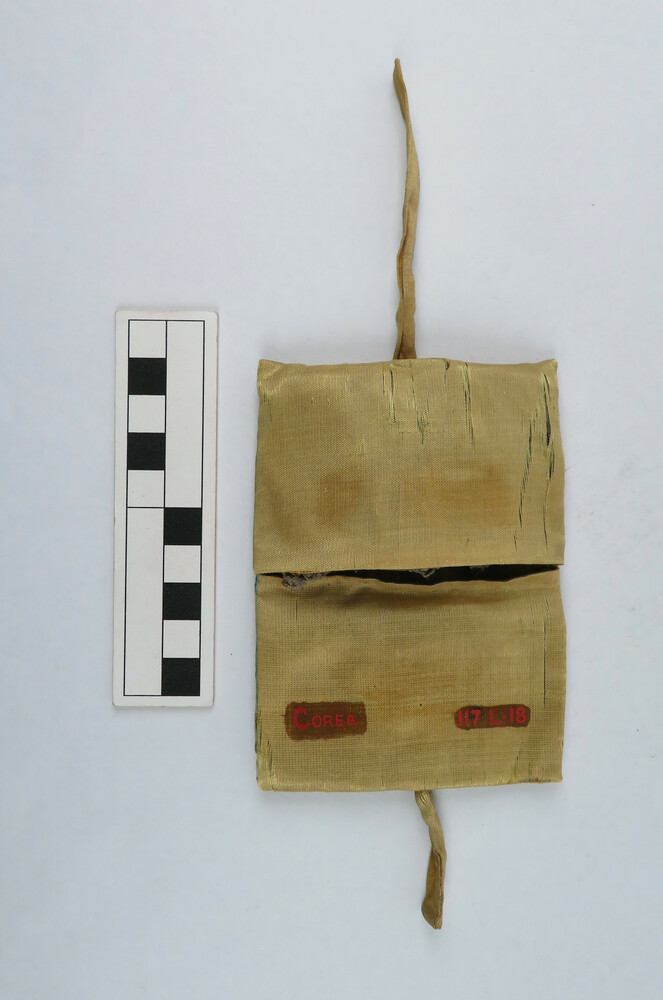 1892.18.4.1Tinder pouch [.1] of silk, steel [.2], flint [.3], and tinder [.4]. [DCF Court Team 29/11/2002]1892.18.4.1
 1959.3.2.12Model arrow. Found inside quiver [1959.3.2 .4] See [1959.3.2 .1 - .32] for the associated components of this object. [BS [OPS move] 18/9/2017]1959.3.2.12
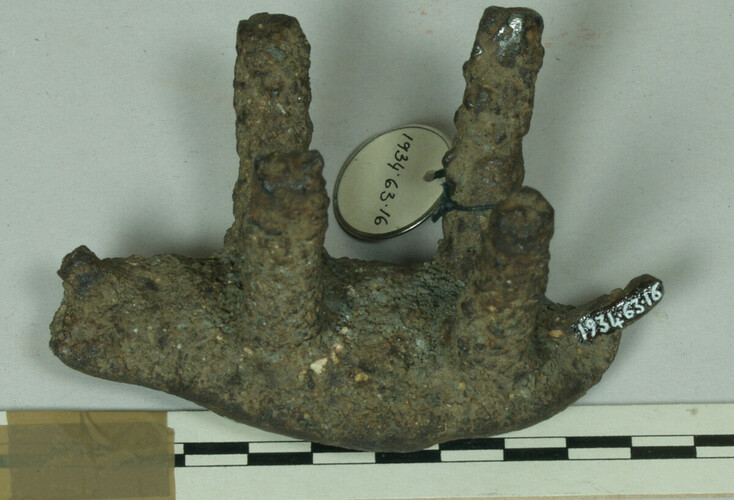 1934.63.16Metal animal figure with 4 legs and flat body.1934.63.16
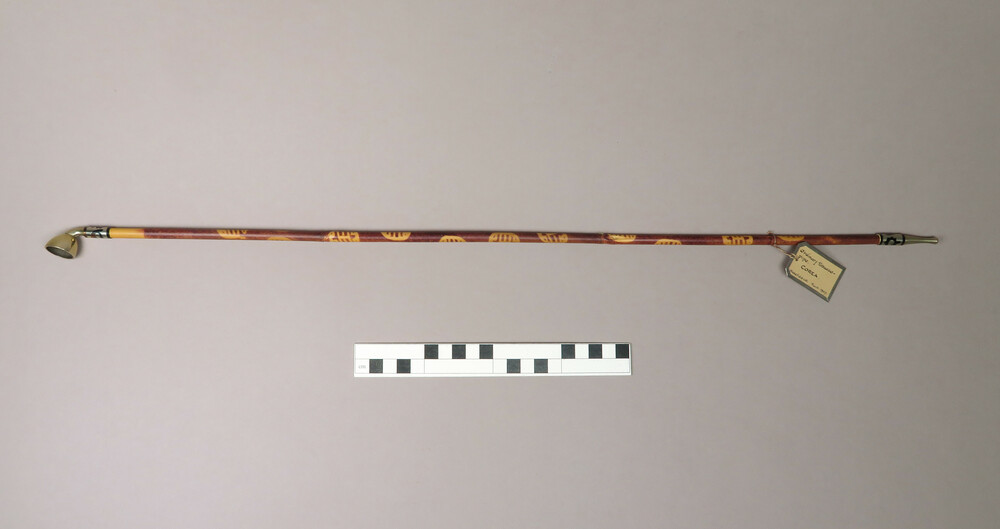 1907.80.5Tobacco pipe.1907.80.5