
- Collection type
- Object
- Description
- Brass arm ornament formed into a spiral, with enlarged conical ends decorated with dotted scrolls.
- Cultural groups
- Rongmei/Kabui Naga
- Date / Period
- Date made: Before 1932
- Date collected
- circa 1932
- Acquisition information
- Donated: 1952
- Materials and processes
- Material Brass Metal, Process Decorated, Process Coiled
- Dimensions
- Length: max 130 mm, Diameter: max 80 mm
- Object numbers
- Accession number: 1952.3.1.1 Other PRM accession number: 1952.3.1a
- Research and responses
Notes on Gaidinliu by Julia Nicholson 2008: In the early 1930s a rebellion spread through the Kacha, Zeliang (Zemi) and Kabui Naga communities based on a new religious movement. Initially this cult was led by a seer named Jadonang and his devoted disciple, a young woman called Gaidinliu. Following Jadonang’s execution by the British (after he was convicted of the murder of four Manipuri traders) Jadonang was succeeded by Gaidinliu. Both Jadonang and Gaidinliu were considered to have special visionary powers and were described by followers as maibas (traditional shamans) who could foretell the future and cure the sick. They were treated as god and goddess and collected large amount of tribute from their followers. The religion they practiced was highly ritualistic and new gods and shrines were established based on Naga animism embellished with a mixture of Hinduism and Christianity. The magical symbols in the Gaidinliu notebooks were an important part of this belief system. The repetitive symbols resemble writing but are of no known language. It is said that Gaidinliu used these pages to enhance her power and they were sent as messages to her followers with the messenger providing a verbal translation. At this time of deprivation for Kacha, Zeliang (Zemi) and Kabui Naga communities, oppression by their Kuki enemies and resentment of the imposition British administration, it was believed by cult followers that adherence to this new set of religious practices would usher in a new era of plenty and the fall of the oppressors. After some years people got tired of the unending demands for tribute for the “goddess” and Gaidinliu was betrayed by one of her people, captured by the British and sentenced to 14 years in jail. Before her arrest Gaidinliu had told her followers that even if she was caught by the police, her real and divine self could not be imprisoned and her spirit would return to the people in a disguise so that her enemies would not recognise her. So the hope that Gaidinliu would return to lead her followers to freedom lived on. An interesting footnote is that in the early days of her fieldwork among the Zeliang (Zemi) in Nagaland, Ursula Graham Bower (Betts) was revered as a reincarnation of Gaidinliu. [JN 06/05/2008] See also pages 161 to 163 of The Nagas: Hillpeoples of Northeast India, by Julian Jacobs and pages 46 to 50 in Messianic Movements in Primitive India by Stephen Fuchs, 1965. [JN 06/05/2008]
- Associated publications
- See also pages 161 to 163 of The Nagas: Hillpeoples of Northeast India, by Julian Jacobs and pages 46 to 50 in Messianic Movements in Primitive India by Stephen Fuchs, 1965. [JN 06/05/2008]
Search terms: Ornament, Arm Ornament
Further items to explore
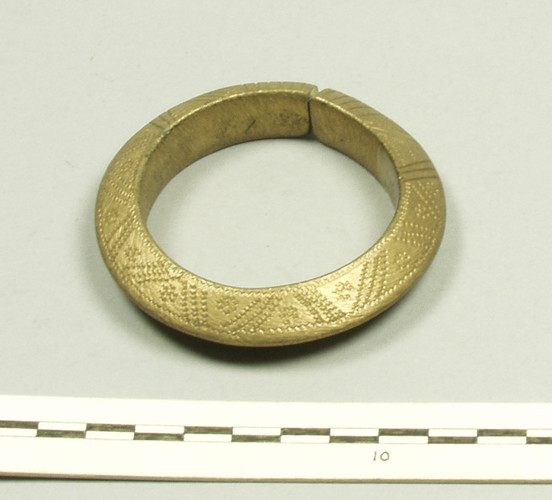 1892.24.60Brass bracelet with incised lines and dots in zig zag patterns. Possibly a pair with 1892.24.61. [El.B 'DCF 2004-2006 What's Upstairs?' 15/11/2005]1892.24.60
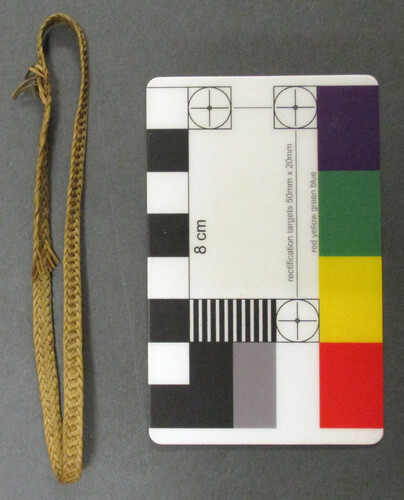 1938.36.648Armlet, made from pandanus plant fibre plaited into a band. Roughly oval in shape. [ASh [OPS move] 14/11/2016]1938.36.648
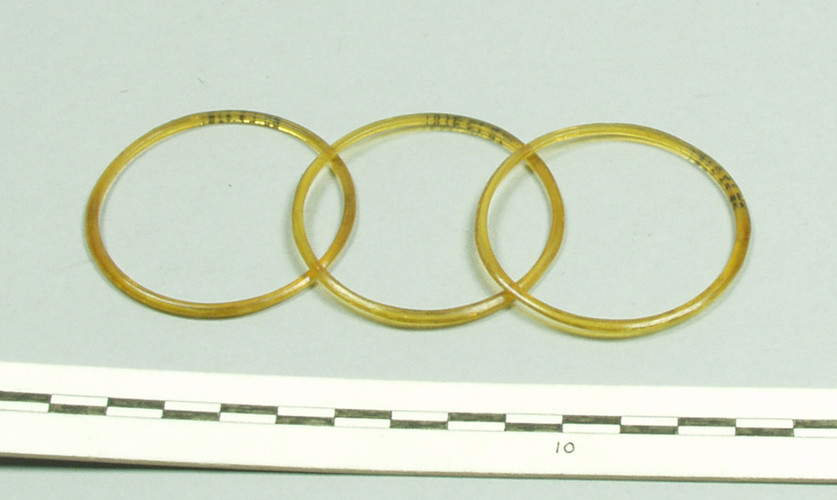 1892.24.86Small thin yellow glass bangle. [El.B 'DCF 2004-2006 What's Upstairs?' 14/11/2005]1892.24.86
 1927.19.62.6Arm ornament; penannular brass bangle with a facetted outer edge. [EC 'DCF 2004-2006 What's Upstairs?' 14/10/2005]1927.19.62.6
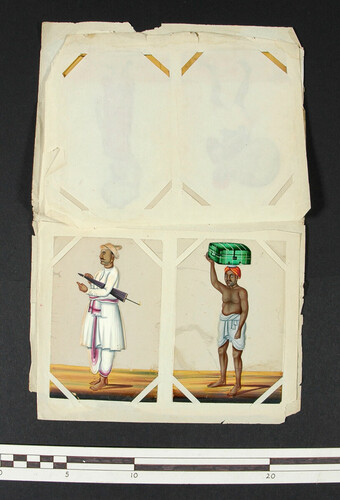 1959.9.50Paper containing three sheets (two of which are loose) each with two paintings of Indian servants. [LKG 18/11/2009]1959.9.50
 1928.69.339.2One from a bundle of seven bamboo calthrops or panjis. [MJD DDF Body Arts Project 2010/2011 28/09/2010]1928.69.339.2
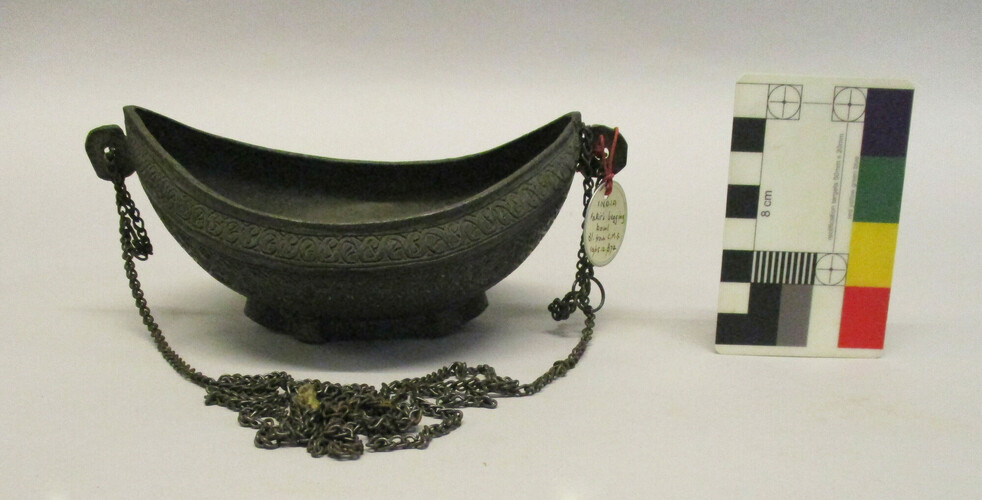 1965.12.72BMetal boat-shaped begging bowl on a chain, incised geometric design. [ZM 13/1/2006]1965.12.72B
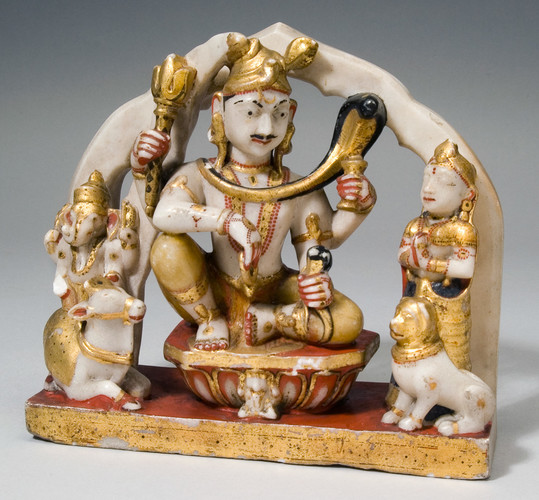 1884.59.67Coloured and gilt marble carving, Shiva with Parvati and tiger, Ganesh and Nandi bull. [DCF Court Team 18/12/2002]1884.59.67