
- Collection type
- Object
- Description
- Green glazed pottery ?lip stud. [ZM 30/03/2007]
- Person
- Field collector Henry Solomon Wellcome
- PRM source Wellcome Trustees
- PRM source Ashmolean Museum, University of Oxford
- Date
- Date collected
- 1910 - 1914
- Acquisition information
- Donated: 1949
- Dimensions
- Length: max 35 mm
- Object numbers
- Accession number: 1949.12.134 Other numbers: 2119
- Research and responses
As mentioned in Primary Documentation the archaeological excavations at Jebel Moya were published in 1949 by Frank Addison who was appointed to author the report after the death of Sir Henry Wellcome. Addison identified the main phase of activity at the site as being 1000-400 BC. In 1956 he published an article in the journal Kush in which he critiqued his own phasing and suggested 500 BC to 400 AD as more accurate. Full references: Addison, F. 1949. Jebel Moya: The Wellcome Excavations in the Sudan. London/Oxford: Oxford University Press (Published for the Trustees of the late Sir Henry Wellcome by the Oxford University Press). Addison F. 1956. Second thoughts on Jebel Moya. Kush 4: 4-18. [MN 16/02/2009]
A general review [in German] of the archaeological excavations at Jebel Moya was published in 1994 by Rudolf Gerharz as part of the Meroitica series. Gerharz reviewed the stratigraphy/phasing of the site and suggested a revised chronology; Phase I - 5000-3000 BC, Phase II 3000-800 BC and Phase III 800 - 100 BC. Full reference: Gerharz, R. 1994. Jebel Moya (Meroitica 14). Berlin: Akademie. [MN 16/02/2009]
A brief general summary of the Jebel Moya site can be found on the Digital Egypt website hosted by University College London [UCL]: "Excavations were carried out from 1909-1914. About 3000 tombs and a great quantity of settlement debris were found. These remains indicate a perhaps only visited seasonally population focus (maybe nomads - till about 500 BC). There is evidence for domesticated cattle. There are some datable finds suggesting that the settlement later became permanent and flourished around 500 to 100 BC. These datable finds are mainly objects imported from the Napatan/Meroe empire. At present it is not clear whether Jebel Moya was part of the empire or not." http://www.digitalegypt.ucl.ac.uk/nubia/jebelmoya.html [MN 16/02/2009]
Search terms: Ornament, Pottery, Lip Ornament
Further items to explore
 1886.1.760.5Perforated stud of ivory. [El.B DDF Body Arts Project 2010/2011 06/10/2010]1886.1.760.5
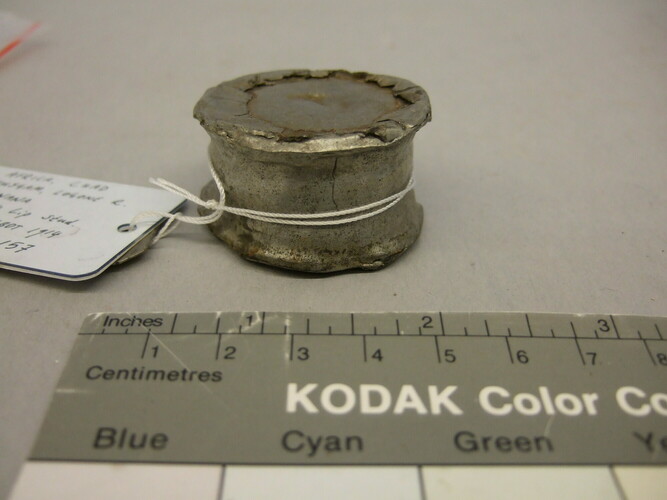 1914.26.157Cylindrical lip plug made from wood and roughly covered with a layer of aluminium.1914.26.157
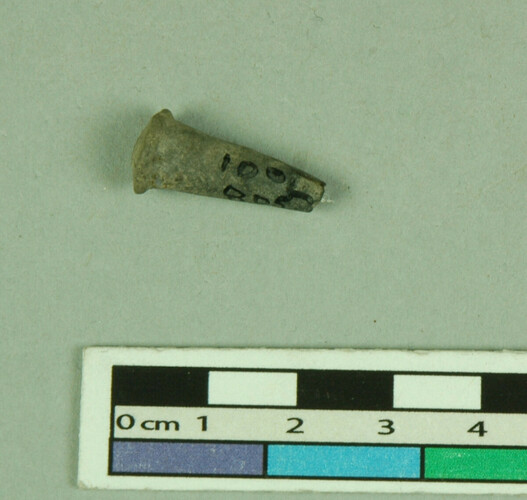 1949.12.22.2.1Pottery lip stud from burial site. [ZM 02/04/2007]1949.12.22.2.1
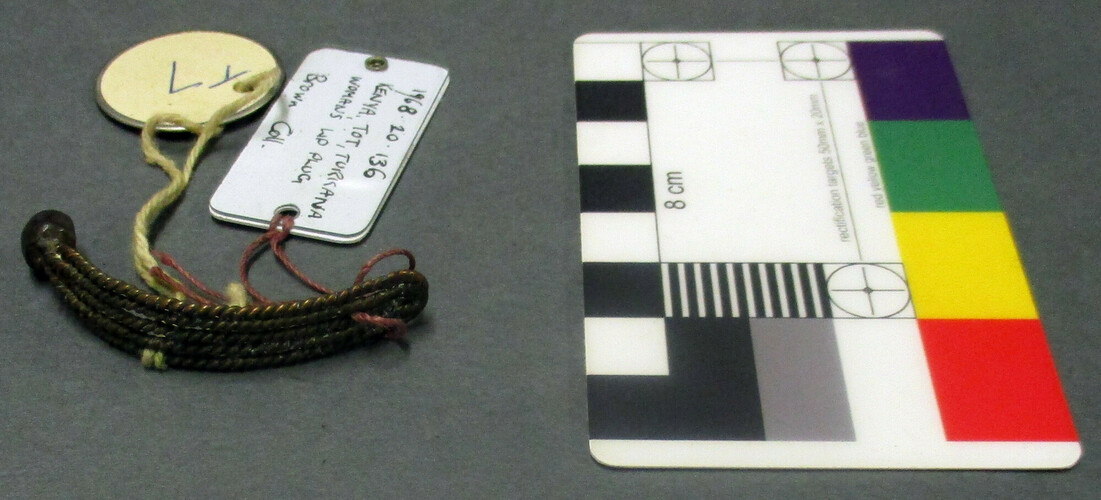 1968.20.136Twisted brass lip plug comprising five lengths of twisted metal. [FC 12/08/2010]1968.20.136
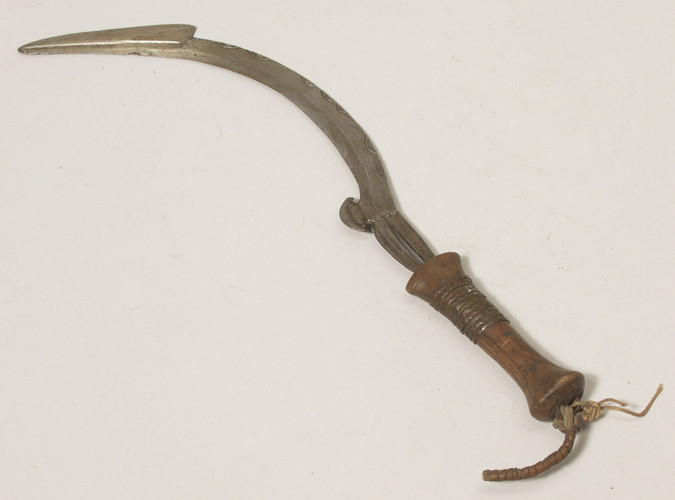 1899.85.1Model of a knife with curved iron blade and a projecting spur at its base, set in a wooden handle bound with copper strips [RTS 31/8/2004].1899.85.1
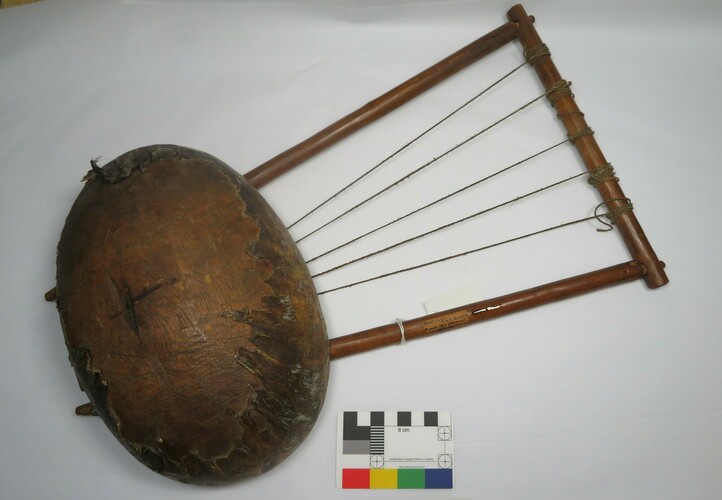 1938.34.655Lyre with oval wooden bowl resonator1938.34.655
 1908.27.1Quilted textile helmet made of indigo-dyed cotton, trimmed with cotton and adorned with five tassels. 1908.27.1
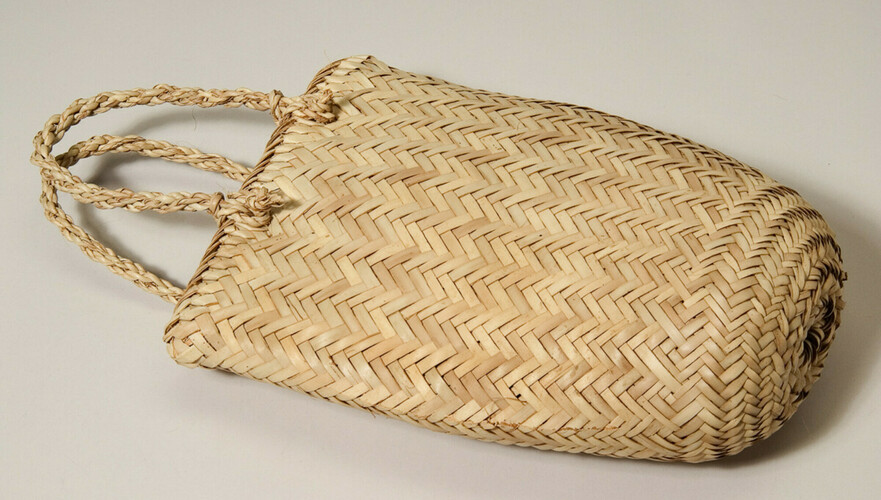 2001.77.15Basketry bag with two handles for carrying, Used for grain. The basketry has been executed in a herringbone pattern. [JP 16/2/2004]2001.77.15