
- Collection type
- Object
- Description
- Tall horn cup with everted rim and concave sides flaring in to a flanged base with flat underside, used to nullify poisoned drinks [RTS 25/8/2004].
- Long description
- Deep cup carved from a single piece of rhinoceros horn, and consisting of an everted rim sloping down to the mouth interior, with a flattened outside edge; below this the walls curve concavely in to form a tall body on a slightly recessed foot with two flanges that step inwards to a flat base. The exterior has been decorated with two grooves around the upper body just below the rim, and a similar pair just above the recessed foot. There are clear turning marks around the outer walls and on the flat base underside. Similar marks may be seen on the interior walls, while the centre of the base interior has a raised section with interior circular depression that is typical of objects hollowed out using a drill. The horn is a translucent caramel brown throughout (Pantone 465C). It is complete, with one crack running down the side from rim to mid body. The cup has a rim diameter of 75 mm, a base diameter of 40 mm, and is 87 mm high with a weight of 63.3 grams [RTS 25/8/2004].
- Geographical reference
- Date / Period
- Date made: Before 1891
- Date collected
- 1891
- Acquisition information
- Donated: 08/1949
- Materials and processes
- Material Rhino Horn Animal, Process Carved, Process Turned, Process Drilled
- Dimensions
- Height 87 mm, Diameter 40 mm base, Diameter: max 75 mm, Weight 63.3 g
- Object numbers
- Accession number: 1949.8.127
- Research and responses
In 1891, Lugard was serving as the Administrator of Uganda [RTS 25/8/2004].
Compare this object to 1908.26.5, a rhinoceros horn cup from the Burun which was also believed to neutralise poisons. The inscription on that object commented: 'It is the general custom among Soudanese tribes to present to their friends these cups which are believed to nullify poisons in drinks. The gift is a mark of a special friendship & goodwill'. A comment on the amulets card add further: 'Rhinoceros-horn vessels are said to impart to water a specific virtue against scorpion bite'. The form of the Burun cup is more elaborate, with a pedestal foot [RTS 25/8/2004].
Material confirmed as Rhinoceros horn showing characteristic pigmentation and filament structure, by Dr Sonia O'Connor, University of Bradford on 7th April 2014. [AH 15/04/2014]
Search terms: Vessel, Religion, Food and Drink, Medicine, Cup, Food Accessory, Amulet, Medical Accessory
Further items to explore
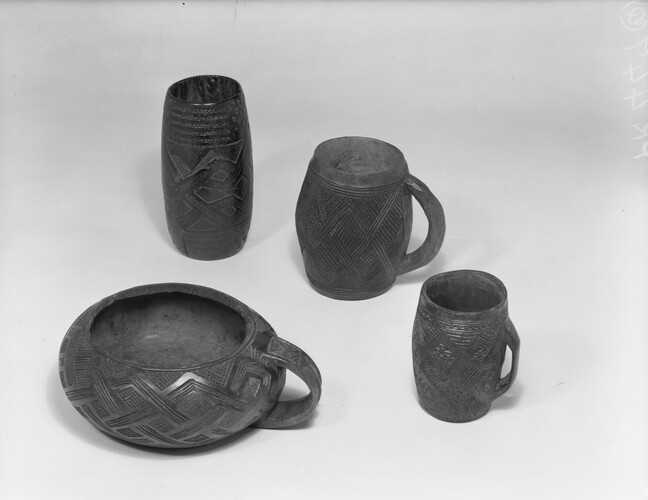 1910.1.70Wooden cup without handle. [DCF Court Team 12/11/2002]1910.1.70
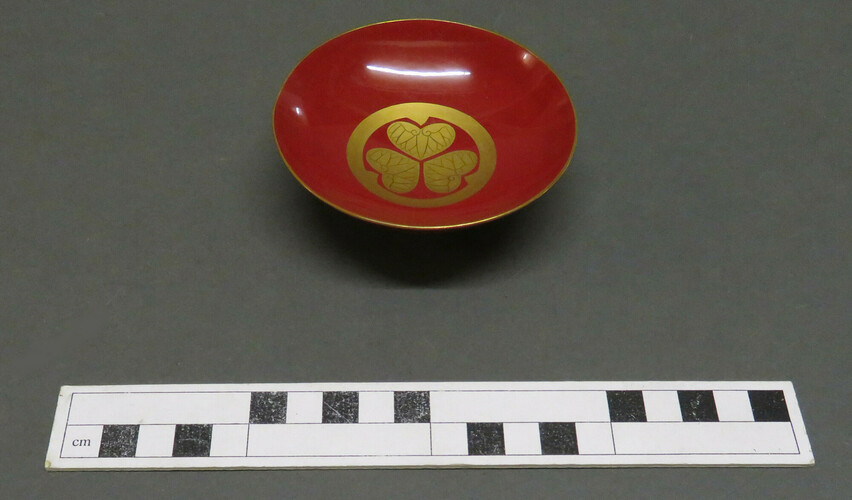 1989.44.136.3Lacquered wine cup. [ASh [OPS move] 13/6/2017]1989.44.136.3
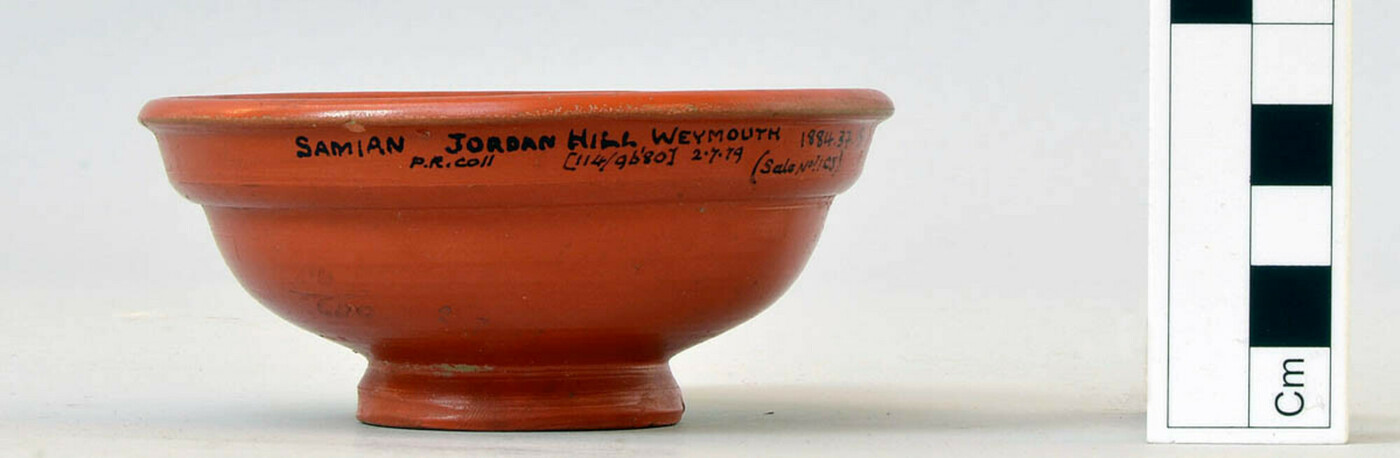 1884.37.15Ceramic bowl; Samian ware bowl with potter's mark.1884.37.15
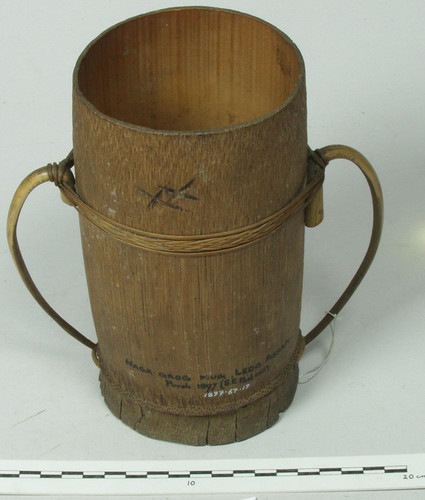 1897.67.19Bamboo mug1897.67.19
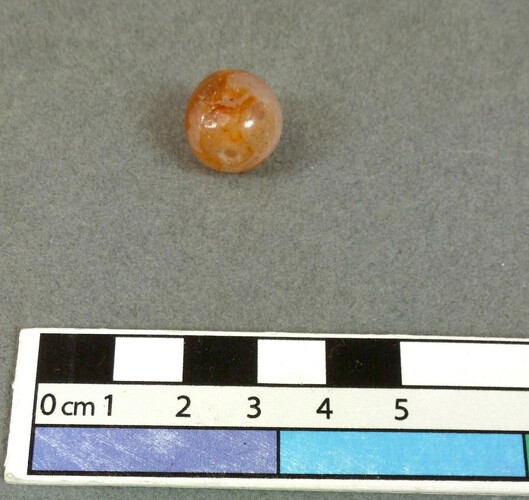 1971.15.452.2Spherical carnelian bead partially bored. The bead is pale transparent orange colour. [FB 18/07/2012]1971.15.452.2
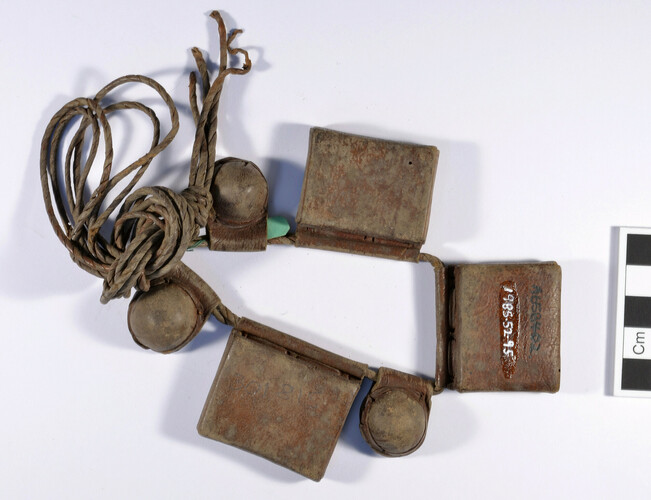 1985.52.95Amulet, three leather cases and three leather domes attached to a leather cord. [RB 17/02/2012]1985.52.95
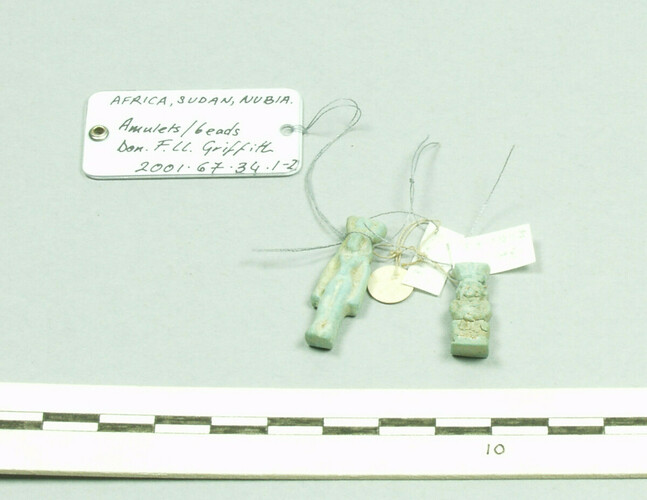 2001.67.34.1Pale turquoise blue faience amulets. One is of the Egyptian god Bes [.2] and the other of Isis [.1]. [El.B 'DCF 2004-2006 What's Upstairs?' 28/6/2005]2001.67.34.1
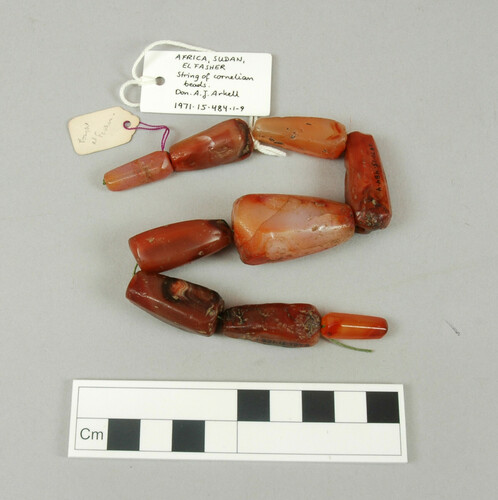 1971.15.484.1String of nine 'date-shaped' carnelian beads, rectangular section. Strung by the donor. [El.B 05/07/2011]1971.15.484.1