
- Collection type
- Object
- Description
- Iron sickle blade with serrated edge.
- Long description
- Iron sickle blade with serrated edge. The blade is curved and serrated on the inside edge. The handle end has a perforation and cross piece of iron. [MJD (Verve) 20/6/2016]
- Cultural groups
- Nubian
- Date / Period
- Date made: 1-300
- Date collected
- 1911- 1912
- Acquisition information
- Purchased: 1912
- Materials and processes
- Material Iron Metal
- Dimensions
- Length x Width x Height: max 167 x 73 x 22 mm
- Object numbers
- Accession number: 1912.89.50 Other numbers: 1912.ß.319
- Research and responses
This object was chosen to feature in a trail around the Pitt Rivers Museum in association with the Museum of English Rural Life on Farming The First 12,000 years (https://merl.reading.ac.uk/explore/online-exhibitions/farming12k/). It featured in a pamphlet with the caption "Sickle blades. Use of curved handtools for harvesting crops predates the earliest farming. The first sickles hand flint blades but they later employed metal. Similar objects are found around the world. In the UK they were common until the nineteenth century when scythes and mechanised reapers took over. These examples include a Neolithic example found in 1937 in Jutland, Denmark, and another excavated in 1911 in Faras, Lower Nubia, Egypt. Faras was later flooded by the Aswan Dam, a project based largely on the need for irrigation for farming." [FB 5/1/2021]
Search terms: Tool, Agriculture and Horticulture, Sickle, Agricultural Tool
Further items to explore
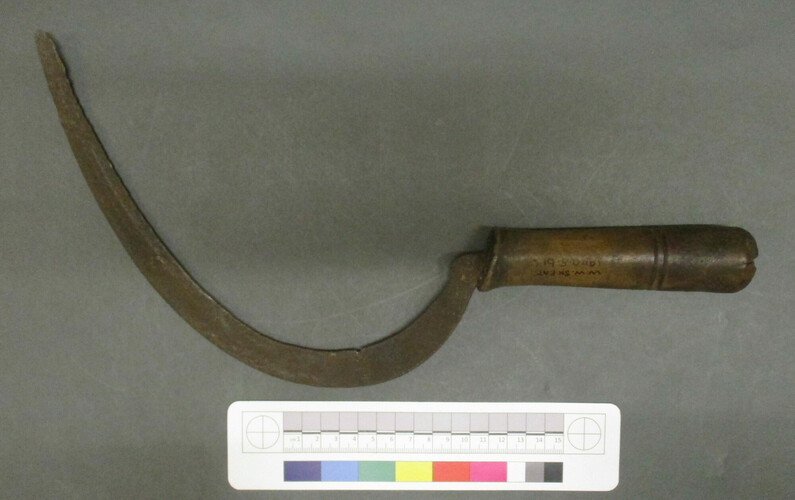 1940.5.61Sickle or reaping-hook with curved iron blade set into turned wooden handle. [JC [OPS Move] 7/12/2016]1940.5.61
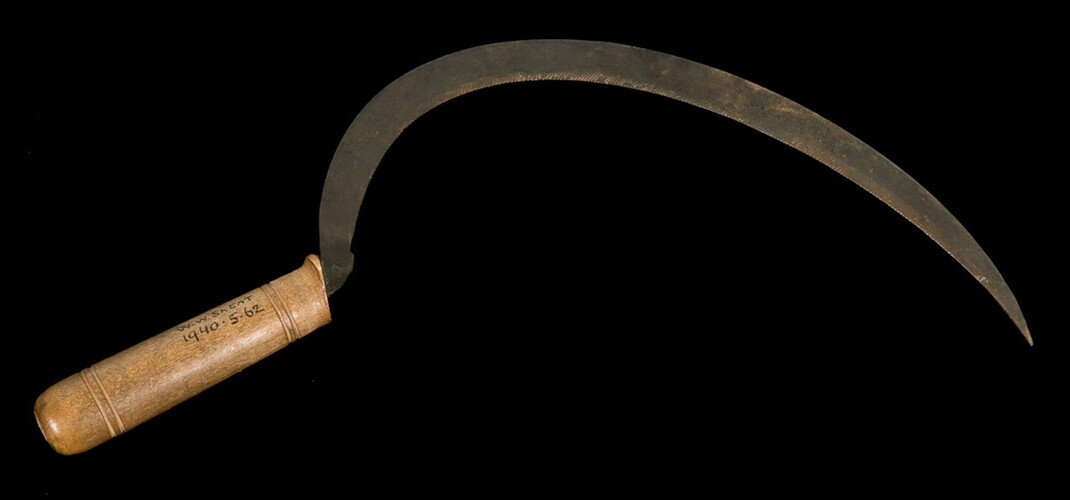 1940.5.62Sickle or reaping-hook. With a turned handle and a curved iron blade that tapers to a point. [SM 07/04/2008]1940.5.62
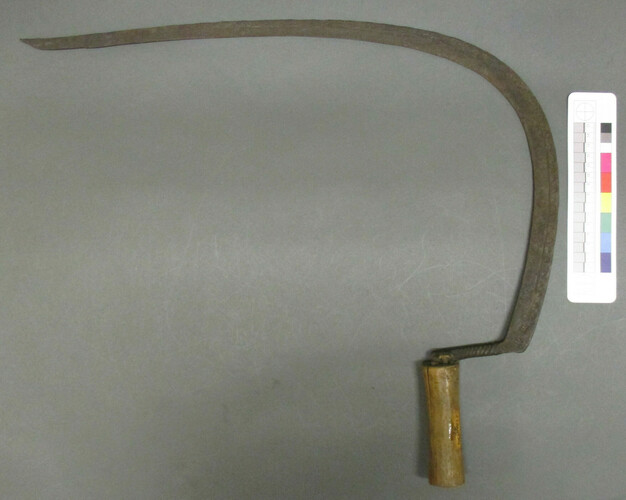 1891.4.3Sickle with very long metal blade set into a cylindrical wooden handle. The narrow blade curves widely to a point and has an angular, twisted shoulder which offsets the blade 90 degrees from the tang. The blade has incised decoration on one face. [JC [OPS Move] 4/1/2017]1891.4.3
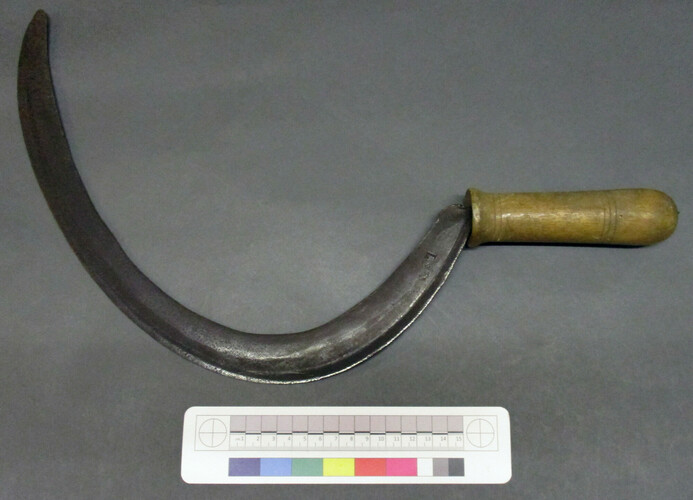 1912.55.16Sickle with curved iron blade set into a turned wooden handle. [JC [OPS Move] 13/12/2016]1912.55.16
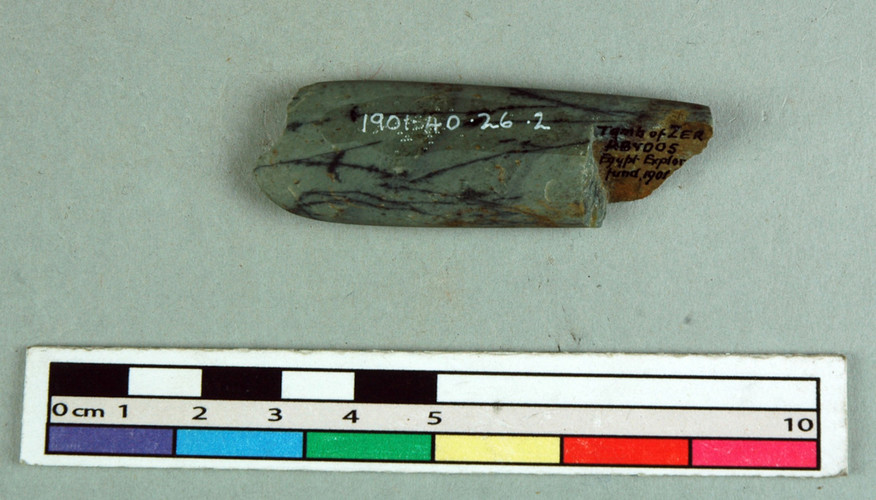 1901.40.26.2Fragment of polished grey stone. [ZM 28/6/2005]1901.40.26.2
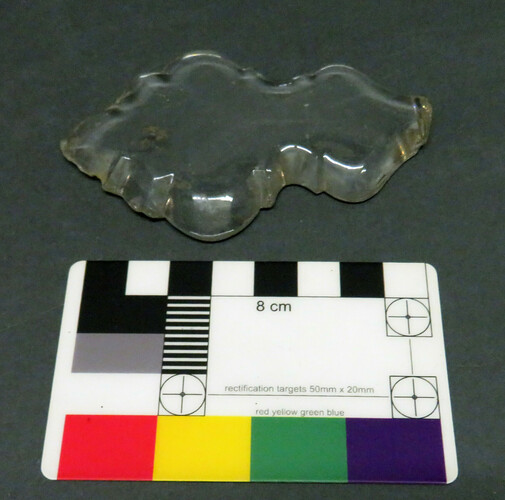 1985.54.1720Amulet; white glass human figure[?]. The head has broken off of the figure. Used as a charm against the Evil Eye. [ASh [OPS move] 08/09/2017]1985.54.1720
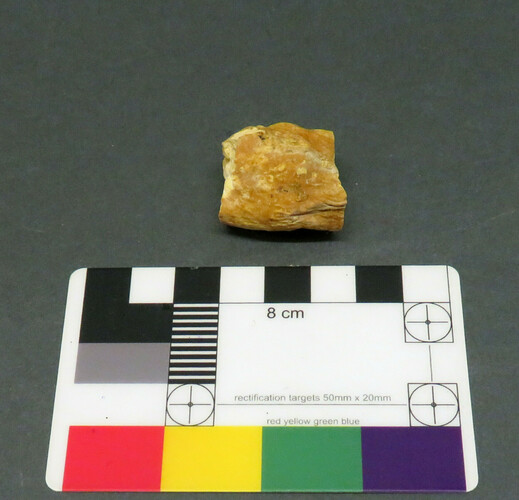 1985.54.1901Medicine. White substance, partially solidified. Very light, possibly a plant or a nut? [ASh [OPS move] 15/09/2017]1985.54.1901
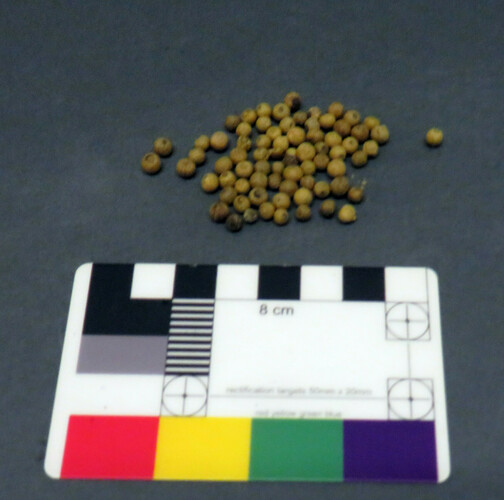 1985.54.1911.1Amulet; Medicine to strengthen the nerves, consisting of 73 white peppercorns. For the other records see 1985.54.1911 .2 - .4 [ASh [OPS move] 15/09/2017]1985.54.1911.1