
- Collection type
- Object
- Description
- Ornament made from the basal whorl of a cone shell with a central perforation. [EC 'DCF 2004-2006 What's Upstairs?' 7/10/2005]
- Cultural groups
- Lozi
- Date / Period
- Date made: Before 1939?, uncertain
- Date collected
- ?By 1939
- Acquisition information
- Donated: Donated, uncertain Found unentered: 1945, uncertain
- Materials and processes
- Material Shell, Material Conus Shell, Process Perforated, Process Ground
- Dimensions
- Diameter: max 63 mm
- Object numbers
- Accession number: 1945.11.27
- Research and responses
The heading in the accession book implies that items in this particular grouping of apparent Balfour material were definitely donated by Balfour rather than simply ascribed to him for convenience of donors' index as were other groupings under 'Balfour' in this accession book. However, the later entry 'Found unentered' written next to the descriptions of 1945.11.24 and 1945.11.23 implies that not only the latter two items but the rest of this grouping too [1945.11.20 - 1945.11.35] may probably or possibly rather than definitely attributable to Balfour. [SHD 27/4/2000]
Referred to in 'Lewanika's Workshop and the Vision of Lozi Arts, Zambia', by Karen E. Milbourne, in Sidney Littlefield Kasfir and Till Förster (eds), African Art and Agency in the Workshop (African Expressive Culture series), Bloomington and Indianapolis: Indiana University Press (2013), pp. 233-51. Milbourne writes (page 241): 'In his unpublished diary, Henry Balfour of Oxford University's Pitt-Rivers [sic] Museum wrote of the means by which he collected Lozi objects for the museum. He never actually ventured into Barotseland proper. Instead, on Thursday, September 14, 1095, he "went with Mr. Fry in one of Carter's canoes with five Barotse paddlers up to Livingstone. Landed there and...went to a native curios store supplied by King Lewanika, bought a fine Lozi basket there, a carved wooden vessel, kangombio etc." Among the other materials he collected are conus shells and their celluloid replicas. On the labels for these objects, he indicates that they were valued as highly as two to three oxen apiece and were worn by men. In fact, they are the prerogative of Lozi royals. If, in fact, Balfour did see men wearing such shells during his shopping expedition, it would suggest that Lewanika's shop was staffed by royals or high-standing officials of the court.' [JC 5 11 2014]
Search terms: Ornament, Status, Neck Ornament, Status Object
Further items to explore
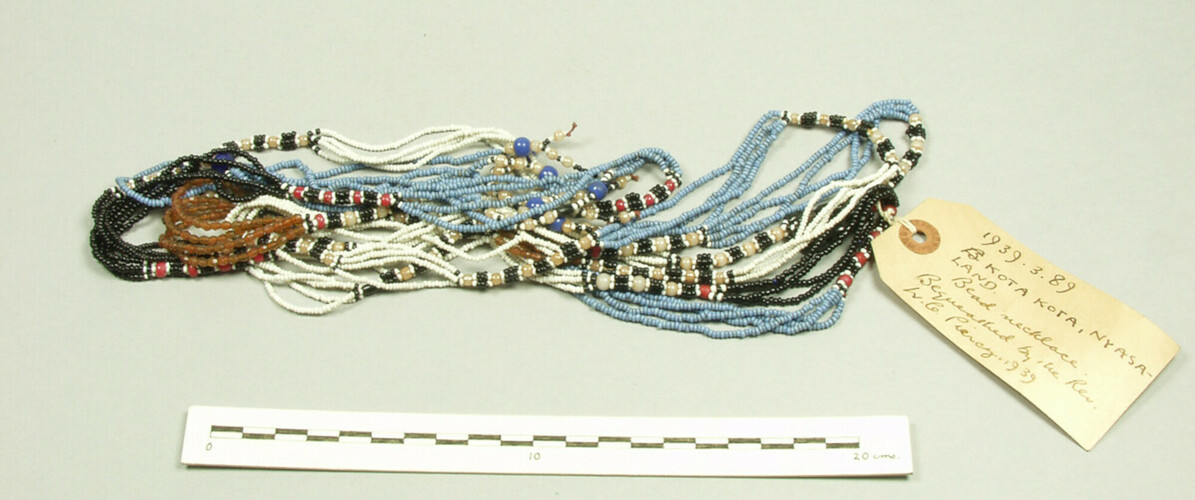 1939.3.89Neck ornament of strings of blue, white, black and amber beads, interspersed with red and pearl-coloured beads, with fringes of blue and pearl-coloured beads. [El.B 'DCF 2004-2006 What's Upstairs?' 11/7/2005]1939.3.89
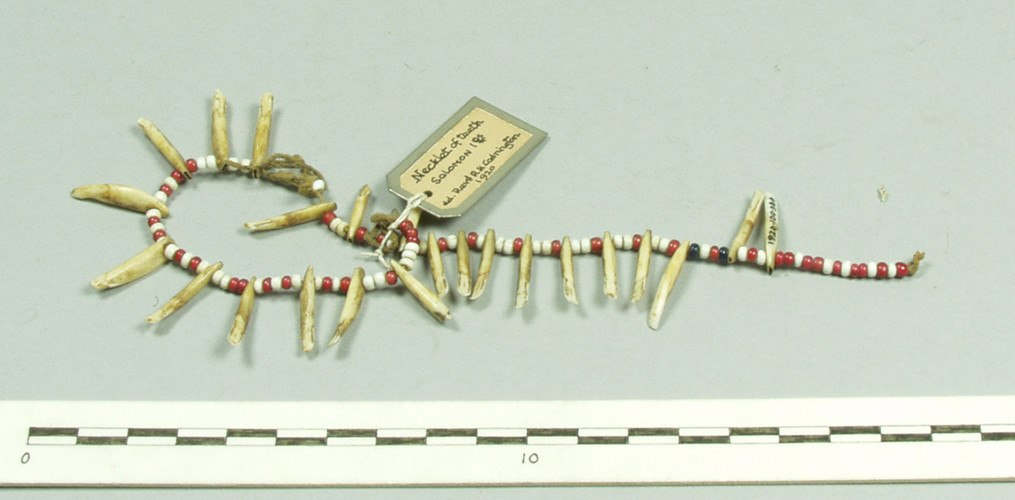 1920.100.386Teeth and trade bead necklet. [El.B 'DCF 2004-2006 What's Upstairs?' 7/12/2005]1920.100.386
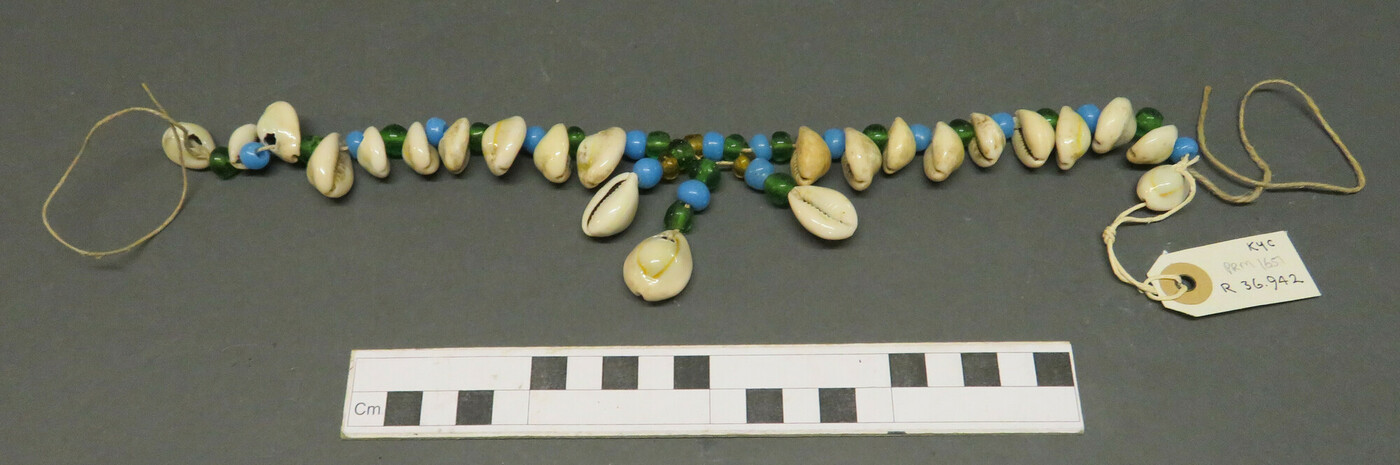 1985.54.1651Amulet; necklace of cowrie shells and blue glass beads strung on a length of string. [SB [OPS Move] 06/09/2017]1985.54.1651
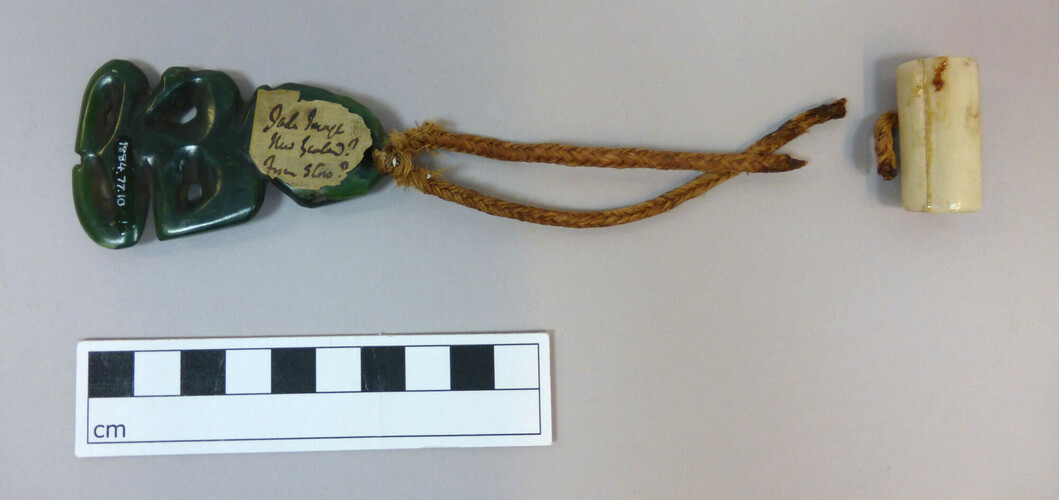 1884.77.10Neck ornament, hei tiki, of nephrite with cord of plaited plant fibre and bone toggle.1884.77.10
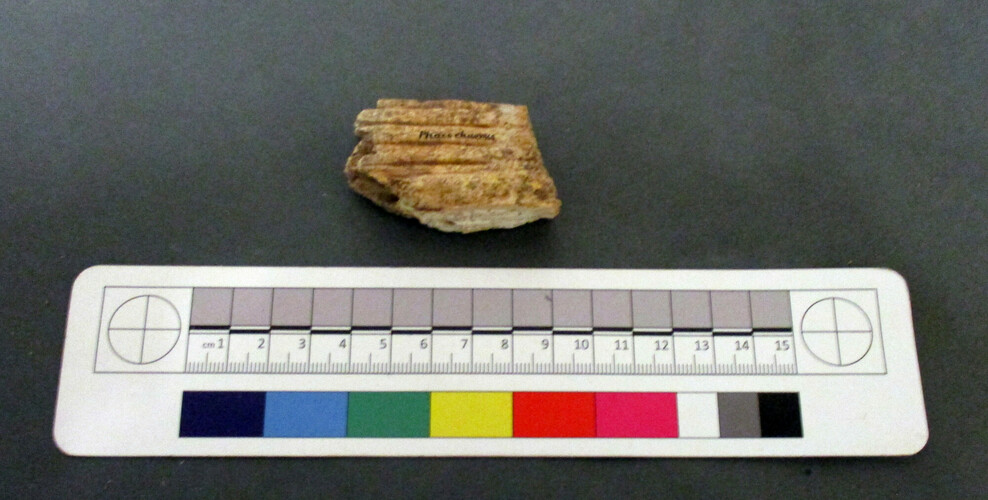 1910.27.22Tooth of a phacochaerus (common warthog). [RH [OPS Move] 3/5/2017]1910.27.22
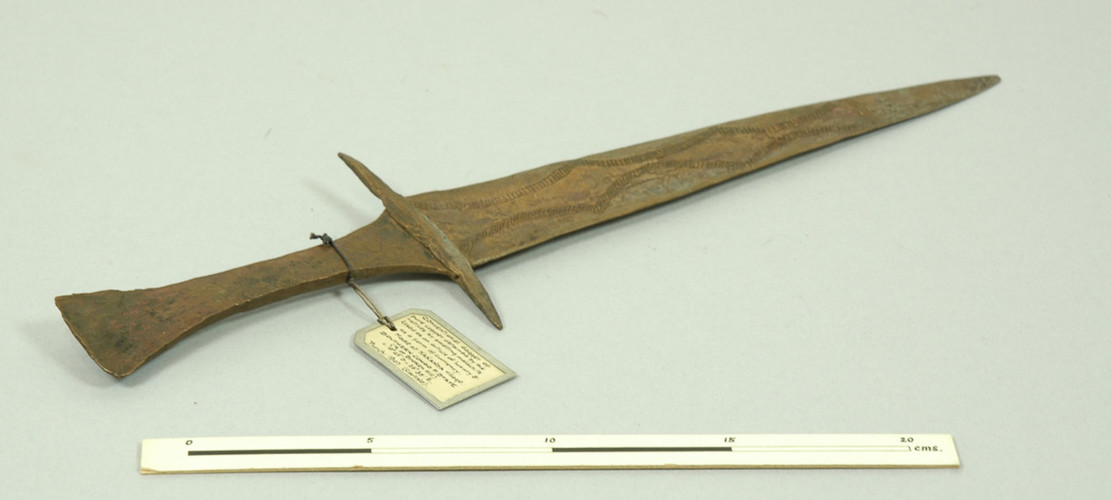 1907.82.8Copper dagger, used as currency and for display. The blade is decorated on both sides with cross hatched incised lines. [SM 14/02/2007]1907.82.8
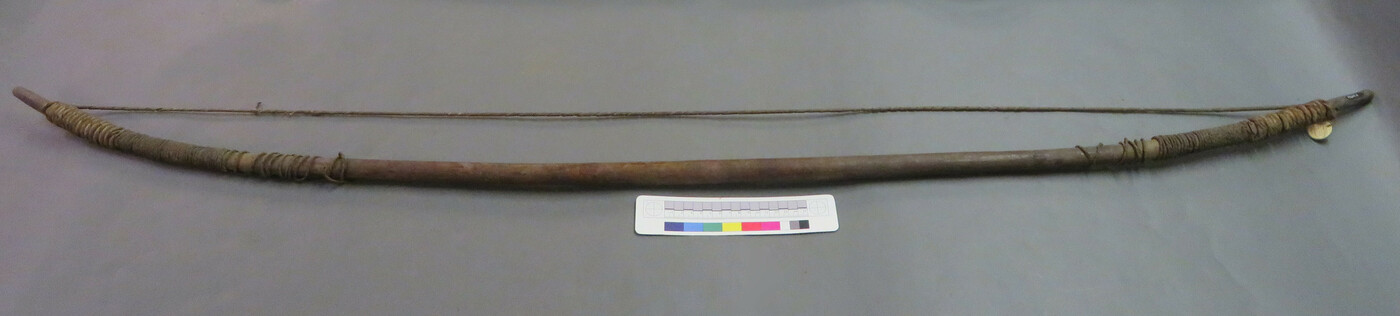 1964.9.8Bow, made from wood with rawhide string. [ASh [OPS move] 7/8/2017]1964.9.8
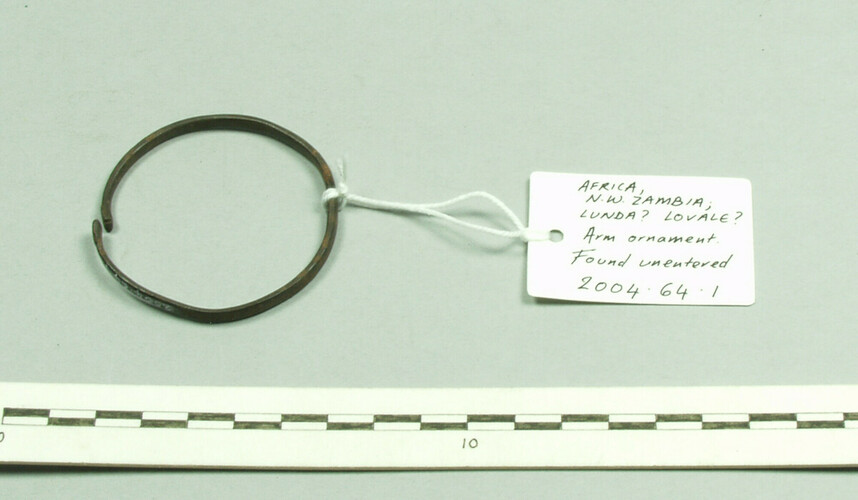 2004.64.1Bracelet made from a bent piece of ?iron. [EC 'DCF 2004-2006 What's Upstairs?' 11/10/2005]2004.64.1