
- Collection type
- Object
- Description
- Wooden headrest carved from a single piece of wood, with concavely curved head support, two vertical pillars and an oval base. There are incised lines in the shape of concentric triangles on one side of one of the pillars. [EH [OPS move] 20/3/2017]
- Date / Period
- Date made: Before 1935
- Date collected
- 1934 - 1935
- Acquisition information
- Donated: 1936
- Materials and processes
- Material Wood Plant, Process Carved, Process Incised
- Dimensions
- Height: max 185 mm, Width: max 175 mm
- Object numbers
- Accession number: 1936.16.108 Other numbers: 365
- Research and responses
Related Documents File - Note by donor: 'NAMES OF SOME TRIBES COMPRISING THE WAGOSHA OR MAHAWAI also called OJI on the river GIUBA. [insert] From personal observation - details obtained directly in Swahili [end insert]MAHAWAI Is the name usually used by the people themselves. WAGOSHA is also used by them and by the Arabs and Somali. Gosha was I think the name of the tract of country. Oji is used for them too. I only heard this name given them by the Somali. The liberated slaves of the Somali, these people came for the most part from further South, from tanganika and Kenya, and the Zanzibar slave market. Some were settled on the Giuba by the British Government, many others moved there when liberated. They are now living on both banks of the river Giuba, South of Gelib, but most of the villages are on the right bank, (facing the mouth of the river). N.B. Wightwick Heywood in "Mysterious Lorian Swamp" says many of them came from the Congo and West Africa, I have never heard this corroborated or seen any proof of it. Some Tribes settled in Gosha country on Giuba.: Miau. Magnasa. M'Lima (I never met these). M'Jindu. Makùa. M'Werra. M'Nindi. Magnamesi. Mukomanga. Magnika. (sp?) For some years utnil Scek Murian, (date?) the Miau, like the Mashan Gubi did not practice cliterodectomy, and therefore did not intermarry with the Somali. (see notes Mashan Guli people) Though Miau and Mashan Guli intermarried.' [MOB 5/12/2001]
According to the Ethnologue Online, Daarood is a large clan family in northeast Somalia
and the Ogaadeen region of Ethiopia, extreme southern Somalia and northeast Kenya which speaks several different dialects. [CW 11/5/2000]
Search terms: Furniture Dwelling, Headrest
Further items to explore
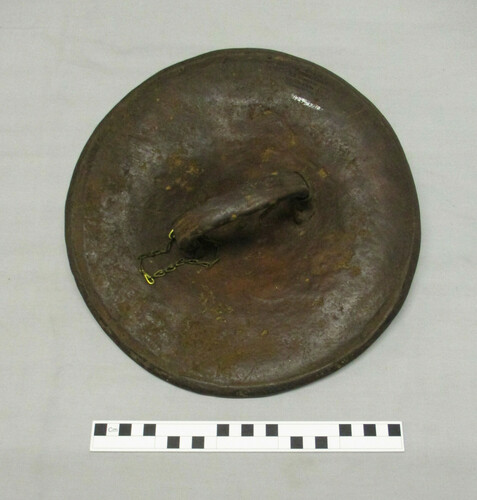 1927.19.10Circular hide shield with inclined rim and bands of punched geometric designs. [CW [OPS move] 11/8/2016]1927.19.10
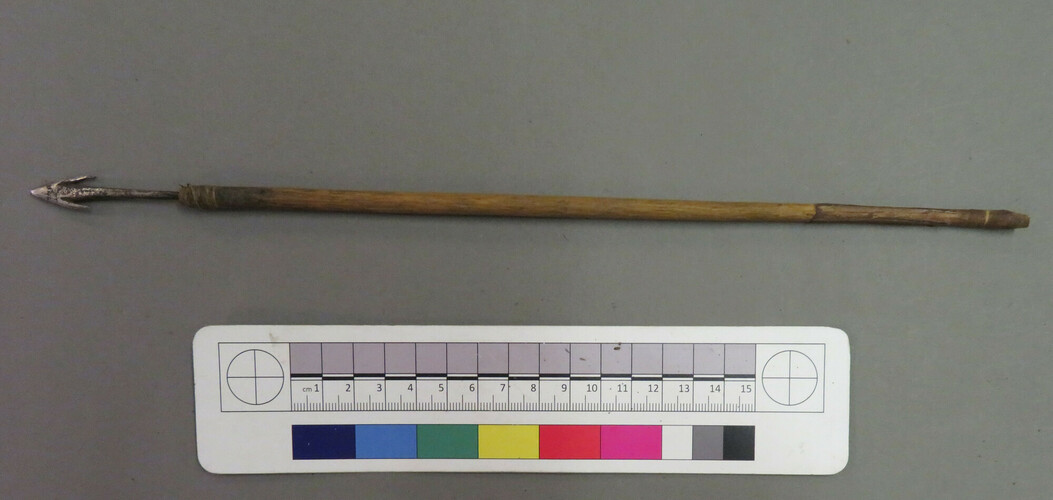 1925.9.8.6Arrow with wooden shaft and iron head. For the quiver associated with this object see [1925.9.8 .1] and the associated arrows, see [1925.9.8 .2 - .12] [BS [OPS move] 9/10/2017]1925.9.8.6
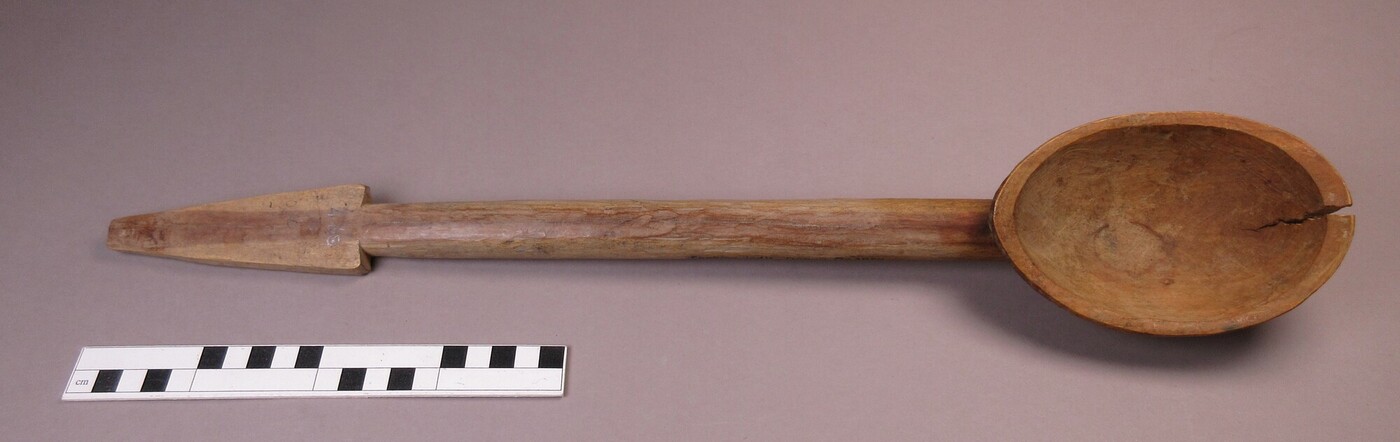 1936.16.100Wooden ladle.1936.16.100
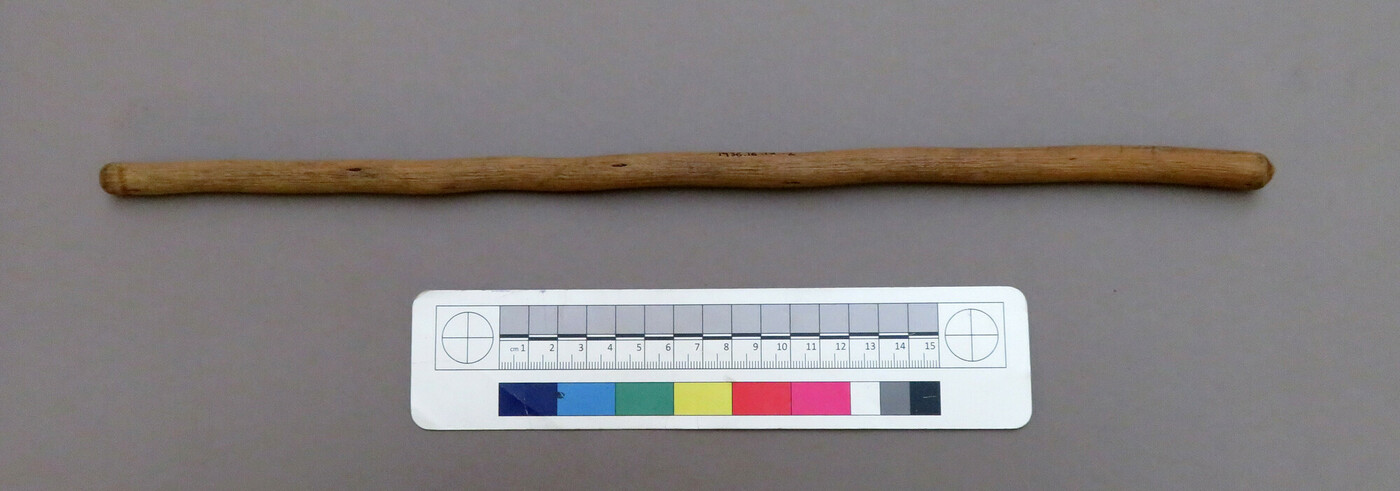 1936.16.17.2Wooden fire drill consisting of a stick circular in section slightly tapered at one end to a point. [AFS [OPS move] 26/11/2018]1936.16.17.2