
- Collection type
- Object
- Description
- War quoit; damascened with gold [El.B 16/4/2007]
- Geographical reference
- Punjab
- Date / Period
- Date made: Before 1906
- Date collected
- Before 1906
- Acquisition information
- Purchased: 01/1906
- Materials and processes
- Material Steel Metal, Material Gold Metal, Process Damascened, Process Forged (Metal)
- Dimensions
- Diameter: max 257 mm
- Object numbers
- Accession number: 1906.64.1.1
- Research and responses
The following notes are drawn from research compiled by Andy Mills as part of the DCF Cutting Edge Project in 2006-2007. While there is clear variation in the quality and manufacturing labour-intensity of different chakra, there is no clear distinction between practical military and dress weapons; the chakram participated in the same northwest Indian tradition of gorgeous visual appearance in the heat of battle, which can be seen in the shields and metallic armour from the same region of India. The quoits are constructed from steel, and overlaid in gold using the koftgari technique.
The akalis were Sikh religious zealots, who wore amongst other things three to four pairs of chakram, fastened to their turbans. Akali turbans for this military purpose did not resemble the conventional Sikh turban we are all familiar with, but were tall conical hats (like a wizard’s cap) constructed from cotton, and decorated with quoits, which decreased in size as they ascended up the height of the turban.
British observers in the 19th century remarked on the esteem and high repute in which the Sikhs held chakram, asserting that these weapons were capable of taking the head or a limb off a man at a range of 60-80m. However, eyewitnesses of their use remarked on their inaccuracy, and that few warriors were capable of sending the chakram in the intended direction. In this, we can perhaps see that the distinctiveness of the chakram was perhaps their greatest attraction to the Sikhs – a possibility further strengthened by the fact that, in Raj times, Sikh regiments often wore epaulette and head badges which took the quoit as their symbol (see ‘The Military Sikhs’ by I. Knight, in The Arts of the Sikh Kingdoms, edited by S. Stronge. 1999. pp. 135-51.). [SM 09/04/2008]
Further items to explore
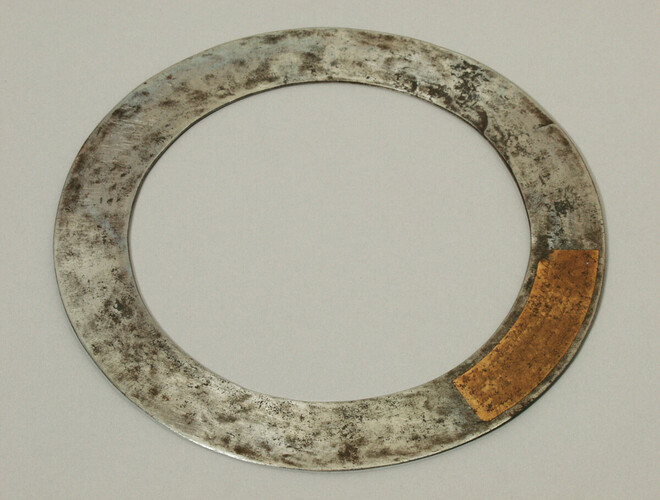 1886.1.37Steel quoit, undecorated [El.B 17/4/2007]1886.1.37
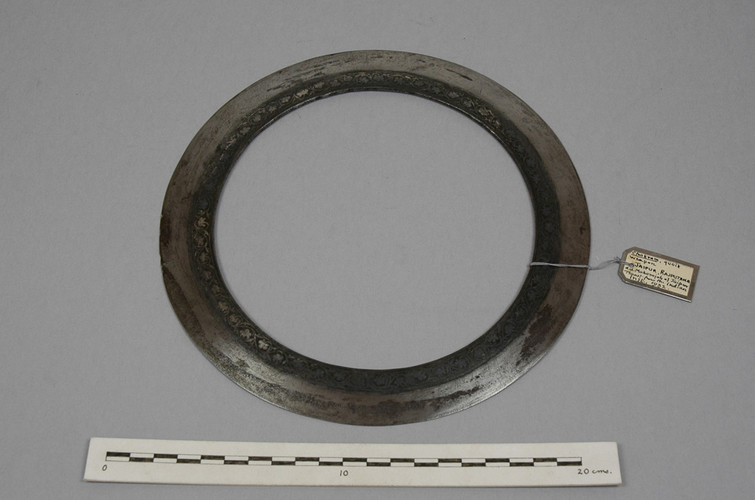 1932.89.104Steel war-quoit with a band of damascened scrollwork on each side. [El.B 17/4/2007]1932.89.104
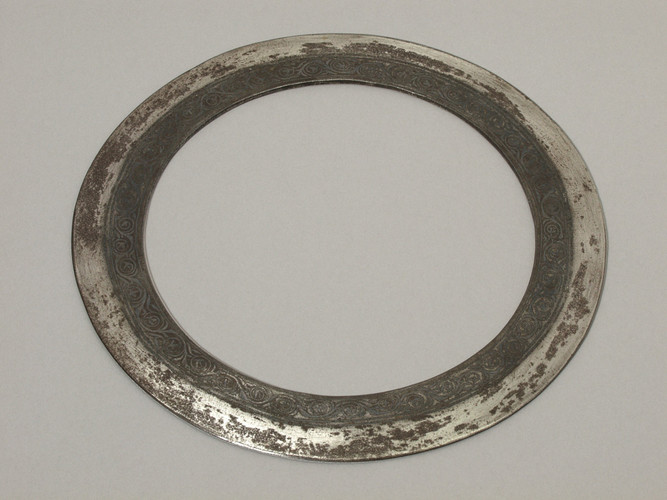 1932.89.105Steel war-quoit with a band of damascened scrollwork on each side. [El.B 17/4/2007]1932.89.105
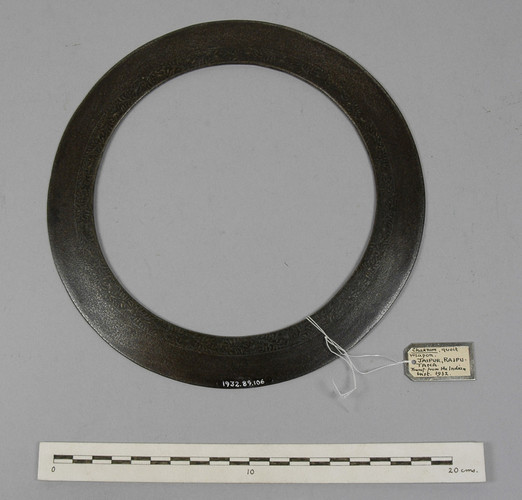 1932.89.106Steel war-quoit, decorated with a band of damascened/inlaid foliage pattern on both surfaces. [SM 06/06/2007]1932.89.106
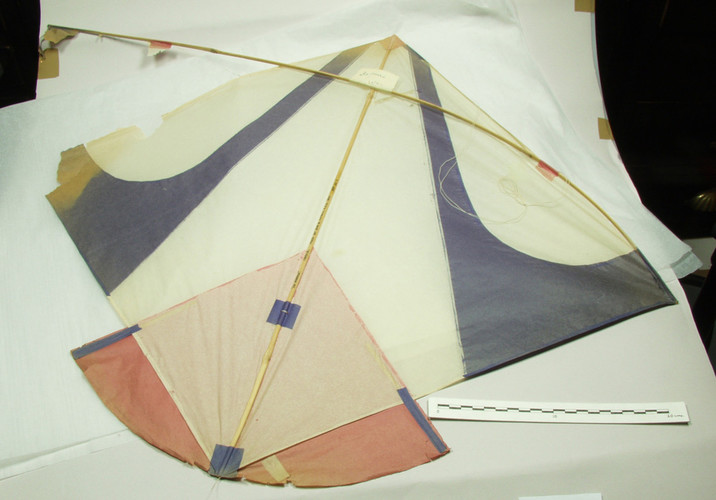 1899.65.11Square kite with white, purple and red design. [N.B. 'DCF 2004-2006 What's Upstairs?' 29/3/2005]1899.65.11
 1938.35.33.2Hearth. Half-section of a piece of wood which is flat on one side. Three pits have been notched out on the edge of the flat side. For the associated fire-drill see 1938.35.33 .1. The fire-drill and the hearth are tied together. [SB [OPS Move] 12/4/2017]1938.35.33.2
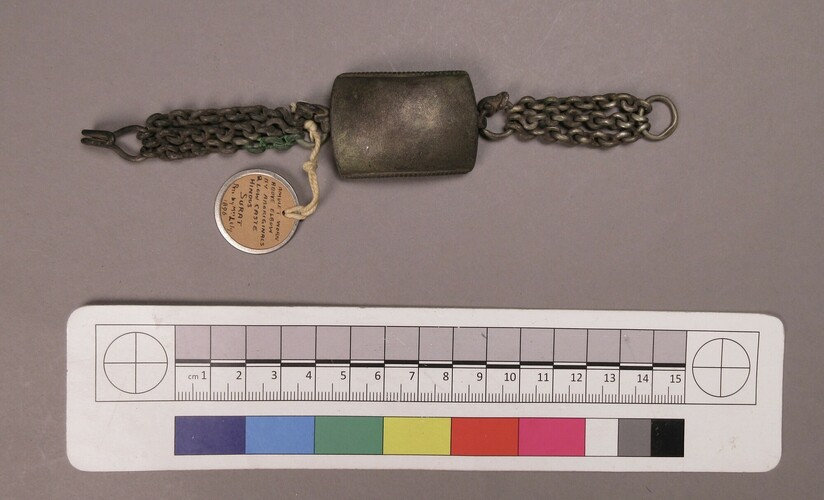 1896.26.3Amulet of hollow metal case on chains.1896.26.3
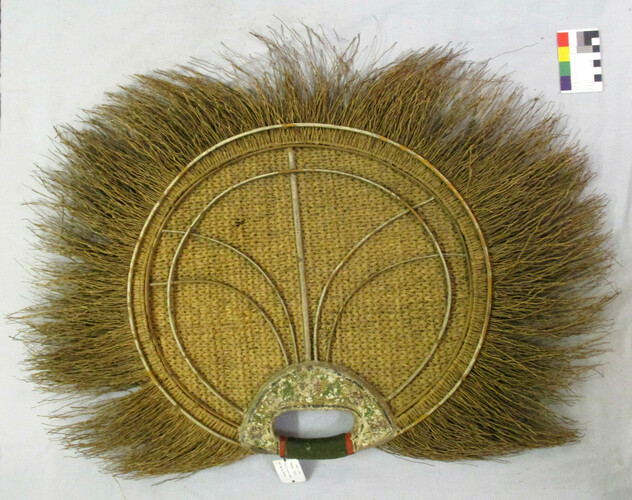 1966.1.779Woven tree root fan with cane support with a handle painted with a floral pattern including red flowers and green leaves. The handle is wrapped with green and red [?]wool or [?]textile.1966.1.779